
Are Cats Liquid? When Cats Flow Through Narrow Gaps

Updated: Apr 10
The phrase "cats are liquid" is often used humorously to describe the remarkable flexibility of cats and their ability to squeeze through almost any opening. In fact, scientists have previously investigated this phenomenon, and one study even approached the topic from the perspective of fluid mechanics, suggesting that cats may indeed exhibit fluid-like properties under certain conditions. The work famously received an Ig Nobel Prize.
In 2024, another study examined the "liquid-like" behavior of cats from a different perspective. Rather than focusing on physics, researchers investigated whether cats recognize their own body size and shape when attempting to pass through obstacles. In other words, the study asked whether cats perceive their bodies in a way that influences their decision to pass through openings—almost as if they were evaluating whether they could "flow" through a gap.

Self-representation
For a long time, scientists evaluated self-awareness in animals primarily through the mirror test. According to this traditional approach, an animal was considered self-aware only if it could recognize its own reflection in a mirror.
However, more recent research suggests that self-representation is not a single all-or-nothing capacity. Instead, it consists of multiple components that may evolve independently depending on a species' evolutionary history and ecological environment. Different animals may therefore possess some aspects of self-representation without necessarily demonstrating all of them.
Although domestic cats have been domesticated by humans, they still retain the instincts of their wild ancestors and function as typical mid-sized predators. Recent studies indicate that cats possess surprisingly complex cognitive abilities. For instance, cats can discriminate visual patterns and quantities, follow human gaze direction, respond to specific vocal tones, and even distinguish their own names from other spoken words. These findings suggest that cats possess more sophisticated social and cognitive abilities than previously assumed.
Despite this growing body of research, relatively little is known about cats' self-representation. Apart from evidence that cats are highly sensitive to their own names, almost no studies have directly examined other aspects of self-awareness. As ambush predators that frequently navigate complex obstacles in their environment, cats may have a particularly strong need for body awareness.
Body awareness
Body awareness refers to an individual's ability to evaluate the relationship between its own body—its size, shape, or other physical attributes—and the surrounding environment before performing an action. This ability allows animals to judge whether a movement is possible.

For animals that move actively through complex environments, body awareness is extremely important. It helps them avoid collisions with obstacles, prevent falls from elevated surfaces, and avoid becoming trapped in spaces that are too small.
Evidence of this ability has been observed not only in mammals but also in certain birds, reptiles, and even insects. Given the agility and spatial navigation abilities of felids, researchers hypothesized that cats might also possess some degree of body awareness.
Experimental approach
Researchers previously tested dogs using a similar experimental setup. In that experiment, obstacles were placed along the dogs' path, each containing an opening through which the dog could pass. The height and width of these openings were systematically altered while the dogs' behavior was observed.
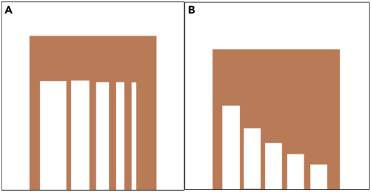
The results showed that when the opening became too low or too narrow, dogs often hesitated or chose to detour around the obstacle. This behavior may reflect the fact that dogs are pursuit predators: becoming stuck or colliding with obstacles could have serious consequences during high-speed movement.
When applying this approach to cats, however, the researchers faced a practical challenge. Cats are generally more independent and less cooperative in laboratory environments. As a result, the researchers recruited domestic cats and conducted the experiments in the animals' own homes. Owners encouraged their cats to pass through the experimental apparatus by calling them from the other side.
In total, 38 cats were initially tested. Eight of them were excluded because they did not meet the experimental criteria, leaving data from 30 cats for analysis.
Results
The results revealed a clear pattern. When the openings were large enough, cats passed through quickly and without hesitation.
When the height of the opening gradually decreased, however, cats began to hesitate before passing through it. In some cases, they even attempted alternative strategies instead of using the opening. Taller cats showed this hesitation particularly strongly.
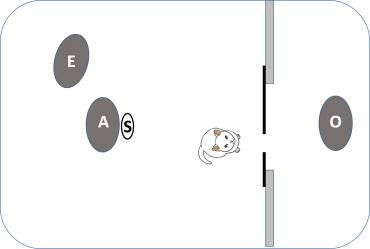
In contrast, when the height remained constant but the width of the opening gradually narrowed, cats showed almost no hesitation. Even when the opening was eventually reduced to only half the width of the cat's chest, many cats still squeezed through.
These results suggest that height and width play very different roles in cats' perception of obstacles. Cats appear to rely on body awareness when judging whether they can pass through openings that are too low. However, they seem far less concerned about openings that are narrow.
Why do cats behave this way?
Researchers propose that this pattern may reflect the ecological preferences and anatomy of cats. Cats tend to favor environments with complex structures—spaces filled with obstacles, hiding places, and vertical surfaces. In such environments they typically move slowly and precisely while navigating through tight spaces.
Cats also possess highly flexible bodies. One key anatomical feature is the clavicle: in cats, the collarbone is not rigidly attached to other bones but instead "floats" within muscle tissue. This structure allows cats to compress their bodies and squeeze through extremely narrow gaps.
As a result, a narrow opening is rarely perceived as a true obstacle for a cat. Passing through it directly is often the most practical solution.
In addition, cats possess highly sensitive whiskers (vibrissae) on their faces. These whiskers can detect nearby obstacles and provide tactile information about the surrounding space. Researchers speculate that when a cat approaches a narrow opening, its whiskers may help estimate the width of the gap even without a visible pause.
Conclusion
In this study, cats showed little hesitation even when encountering openings narrower than their own chest width. This behavior differs from that observed in dogs under similar experimental conditions. The findings suggest that body awareness may not be the primary cognitive strategy cats use when dealing with narrow spaces.
Overall, cats are mammals with highly developed cognitive abilities. In their natural environments they must constantly negotiate complex and dynamic obstacles. The results therefore support the idea that cats possess multiple forms of bodily awareness—including awareness of size, shape, and possibly weight.
Future studies will explore how cats apply these forms of body awareness in more ecologically realistic situations and how these abilities influence their behavior when solving different spatial problems.
Author: Bai Leng
References:
1. Pongrácz, P. (2024). Cats are (almost) liquid!—Cats selectively rely on body size awareness when negotiating short openings. iScience.
2. Tamayo, A. (2024). At-home experiments shed light on cats' liquid behavior. ScienceNews.


Comments