
Centralian Rough Knob-Tail Gecko

Updated: Apr 10

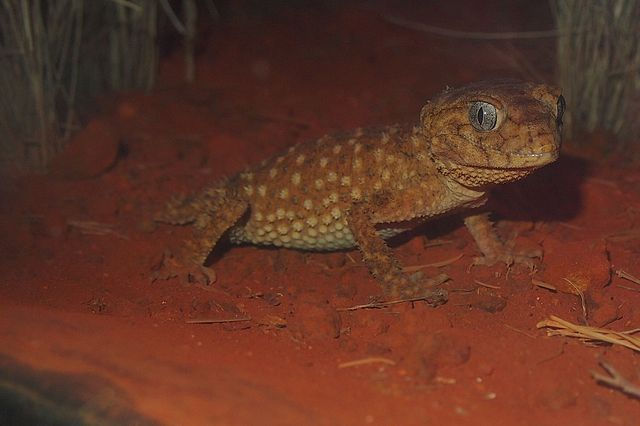
The Centralian rough knob-tail gecko, Nephrurus amyae, is the largest species within the genus Nephrurus. Members of this genus are widely recognized for the distinctive knob-like structure at the tip of their tails, and in this species, the tail is particularly short and uniquely shaped. Its skin is covered with coarse, wart-like scales and spiny projections, giving it a rugged and almost eerie desert appearance. Adults typically reach a total length of 13 to 14 cm and often exceed 50 grams in weight, with females generally being more robust than males.
This species is endemic to the arid interior of Australia, primarily distributed from the region around Alice Springs in the Northern Territory to Barrow Creek. It prefers dry, rocky habitats and is commonly found among rock piles, low hills, and stony soils. These environments are characterized by extreme conditions, with very high daytime temperatures and cold nights, as well as significant seasonal and daily temperature fluctuations. It is a nocturnal species, spending the daytime hidden in rock crevices or beneath debris to avoid heat and predators, and becoming active at night.
In the wild, the Centralian rough knob-tail gecko has a broad diet, feeding mainly on desert arthropods such as insects, spiders, and even scorpions. When threatened, it exhibits a distinctive defensive display: raising its body on extended limbs, producing low growls or short barking sounds, and sometimes lunging toward the threat to deter predators. This combination of posture and vocalization makes it particularly unique among geckos.
Wild individuals can live for more than 10 years, and under proper captive conditions, they can easily exceed this lifespan. Despite their rugged appearance, they are generally shy and cautious, making them unsuitable for frequent handling. They are best appreciated by observing their nocturnal behavior.
Housing Requirements in Captivity
In captivity, their natural desert-rock habitat should be replicated as closely as possible. A single adult should be housed in an enclosure of at least 60 × 45 × 45 cm, with larger space required for a pair. As a terrestrial species, floor space is far more important than vertical height.
For substrate, washed fine sand is commonly used. The thickness can be varied: 2 to 3 cm in dry areas, and 5 to 7 cm in humid corners or laying boxes. Some keepers mix sand with clay or coconut fiber to improve structure, allowing the gecko to burrow or hide more easily. Multiple hiding spots should be provided, such as ceramic pots, flat rocks, bark, or artificial caves. At least one humid hide should be included, maintained with moderate moisture, to aid in shedding and provide a suitable egg-laying site for females.
Daytime temperatures should be maintained at 26–28°C, with a localized basking spot reaching 32–35°C for thermoregulation. At night, temperatures should drop to 20–23°C to mimic natural conditions. During winter, reducing temperatures to around 17–18°C and shortening daylight hours can simulate seasonal cooling, which is important for stimulating reproduction.
As a nocturnal species, this gecko does not require strong UVB lighting. However, low-level UVB can support vitamin D3 synthesis and calcium metabolism, so providing a low-intensity UVB source is recommended, along with shaded areas that allow the animal to choose whether to be exposed.
Overall humidity should remain relatively low, around 30–40%, with localized humid areas reaching about 60%. Light misting two to three times per week can create water droplets on surfaces for drinking. A water dish is optional, but if provided, it should be shallow and stable to prevent accidental tipping or substrate contamination.
Feeding Conditions
Although their natural diet is diverse, captive individuals are best fed a variety of insects. Common feeder options include crickets, Dubia roaches, and red runner roaches. Mealworms, black soldier fly larvae, and other worms can be offered occasionally as treats, but should not be used as staple food due to their higher fat content.
This species is relatively tolerant of infrequent feeding, and overfeeding can lead to obesity. Adults should be fed 2 to 3 times per week, with 4 to 6 appropriately sized insects per feeding. Juveniles and subadults require more frequent feeding, typically every other day, with smaller prey items. Prey size should not exceed the width of the gecko's head to avoid digestive issues or choking.
All feeder insects should be gut-loaded with vegetables or nutrient-rich diets before being offered. Additionally, prey should be dusted with calcium powder and a multivitamin supplement, particularly calcium with low-dose vitamin D3, to prevent metabolic bone disease.
Feeding is best done using a shallow dish or an escape-proof feeder bowl. As a nocturnal species, food should be offered in the evening or at night to match their natural activity cycle.
Breeding Conditions
Breeding in captivity is relatively straightforward, provided that temperature, humidity, and seasonal cues are carefully managed. Males can be distinguished by the presence of hemipenal bulges at the base of the tail, while females lack these structures. Males are generally smaller and more slender, whereas females are larger and more robust.
Simulating winter by lowering temperatures to around 17–18°C and reducing daylight to about 10 hours can help induce reproductive readiness. When temperatures and photoperiod are increased again in spring, males will begin to court and pursue females. After mating, the female's abdomen will gradually become distended over the following weeks.
Clutches typically consist of two eggs, with an incubation period ranging from 60 to 100 days depending on temperature. A common incubation temperature is 27–29°C, with relative humidity maintained at around 60% in a slightly moist medium such as a sand and coconut fiber mix. Females may lay multiple clutches in a season, but excessive breeding can negatively affect their health, so it is advisable to limit the number of clutches per year.
Hatchlings are small but can begin feeding on fruit flies or small crickets within a few days of emergence. Adequate calcium supplementation during growth is essential to prevent deformities associated with metabolic bone disease.
Preventing Invasive Spread
Although the Centralian rough knob-tail gecko originates from the arid interior of Australia and is unlikely to thrive in Taiwan's climate, the principle remains clear: any non-native species, if released or abandoned, can pose ecological risks.
Releasing or abandoning pets is both irresponsible and harmful, often resulting in the animal's death due to inability to adapt. Owners should strictly adhere to the principle of not releasing or abandoning animals. If unable to continue keeping the animal, it should be rehomed through legal animal shelters or experienced keepers.
The legal origin of pets is equally important. Australia enforces strict export controls on native reptiles, and most individuals in the pet trade are captive-bred. Supporting legally bred animals helps reduce smuggling, illegal trade, and overharvesting of wild populations—responsibilities that all pet owners should take seriously.
Author: Shui-Ye You


Comments