
Choice Overload in Frogs

When faced with a wide variety of products, many people have experienced difficulty making a choice. As the number of options increases, making a decision can become more difficult, requiring more time to consider the alternatives and sometimes even leading people to abandon the purchase altogether. This phenomenon is known as choice overload.

In the past, this phenomenon was largely considered to be associated with the complex cognitive abilities of humans. However, subsequent research has found that animals such as bees, ants, mosquitoes, and frogs may also experience similar difficulties when faced with too many options, suggesting that such cognitive limitations are not unique to humans.
In nature, courtship in many animals does not simply involve one male and one female. Instead, numerous males often gather to display simultaneously. Females must distinguish between their signals, remember their individual characteristics, compare potential mates, and ultimately select the best partner. However, as the number of potential mates increases, this task becomes increasingly difficult.
Previous studies have found that when acoustically communicating animals, such as frogs and birds, gather in groups to court, female mate preferences often become significantly weaker. However, scientists have remained uncertain whether this phenomenon is caused by background noise masking male calls or by the sheer number of available mates overwhelming the females' ability to choose.

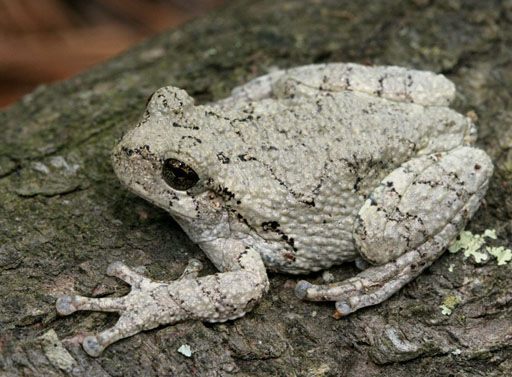
To distinguish between these two mechanisms, a study investigated Cope's gray treefrog (Hyla chrysoscelis = Dryophytes chrysoscelis) using artificially simulated frog calls. By independently manipulating background noise and choice overload, the researchers sought to determine which factor was primarily responsible for influencing female mate choice.
The results showed that as the number of available males increased, the proportion of females selecting the preferred mate gradually declined. When presented with only two options, more than 70% of females selected the male with the longer call. However, this proportion continued to decrease when the number of options increased to four and eight. Even with eight options, female choices remained significantly better than random selection, indicating that their ability to discriminate between potential mates had not been completely lost.
At the same time, the time females needed to make a decision increased significantly with the number of options. Females generally made their choices relatively quickly when presented with only two options, but decision-making time increased substantially when eight options were available, consistent with the predictions of choice overload.
In addition, when the number of options increased to eight, the proportion of females that failed to make a choice also increased significantly. In contrast, there was no clear difference between the two-option and four-option conditions.
Somewhat unexpectedly, although the researchers initially predicted that background frog calls would impair female discrimination, the experiments showed that background noise had almost no effect on whether females abandoned their choices, while its influence on choice accuracy was much smaller than that of the number of options. These findings suggest that the primary factor limiting female mate choice may not be acoustic interference, but rather the cognitive demands of comparing too many potential mates simultaneously.
In the experiments, the differences in male call duration were quite pronounced, and under normal circumstances, females showed a strong preference for males producing longer calls. However, as the number of available males increased, this preference for the more attractive mate weakened significantly, even when the calls did not overlap.
As the number of males increased, females required more time to make decisions and were more likely to abandon their choices. This could have important implications in nature, as gatherings of calling frogs are also occasions when predators and parasites can more easily locate them. Longer decision-making times may therefore increase the risk of attack or result in greater energy expenditure.
When only a few options were available, background noise had almost no effect on female preferences. Interestingly, when eight options were presented, females showed slightly higher choice accuracy in the presence of background noise. This may be because females spent more time making decisions under noisy conditions, or because the auditory systems of frogs possess some ability to use background noise to improve signal detection. However, the actual explanation remains to be investigated.
Nevertheless, the study was conducted under carefully controlled experimental conditions. Although the researchers successfully separated the effects of choice overload and background noise, the experimental setting still differed from natural environments. For example, the simulated male calls varied only in duration and did not overlap, while background noise was played artificially rather than generated by large numbers of calling males. In addition, the experimental arena contained no vegetation that could obstruct sound transmission and no predators or other natural threats. Future studies will therefore need to examine the effects of choice overload on female mate choice under conditions that more closely resemble natural breeding environments.
If choice overload is indeed widespread, the commonly used two-choice mate preference experiments conducted in laboratories may overestimate the strength of sexual selection in natural environments. Male reproductive success may depend not only on how attractive their calls are, but also on the size of the courtship group and whether females can effectively compare numerous available options. The researchers suggest that cognitive limitations may be widespread among animals that engage in collective courtship, including frogs, insects, fish, and birds, and should therefore be considered an important factor in future studies of sexual selection.
(Author: Bai Leng)
Reference:
Hemingway, C. T., Rodrigues, A. V., Vélez, A., Tanner, J. C. (2026). Choice overload constrains mate choice independent of energetic masking. iScience.


Comments