
Cold Waves Enter the Amazon: How Do Rainforest Animals Withstand Sudden Drops in Temperature?

Between 1980 and 2017, 67 cold wave events were recorded across the Amazon basin. In Peru, these events are locally known as friaje. In June 2023, a research team was conducting a biodiversity survey in the lowland Amazonian rainforest of southern Peru when one of these cold waves occurred. From 13 to 18 June, cold air moved northward along the Andes and entered the normally warm lowland rainforest, causing local temperatures to drop sharply within a short period of time. This unexpected event gave the researchers an opportunity to document how a cold wave can alter the activity and physiological stress of rainforest animal communities.

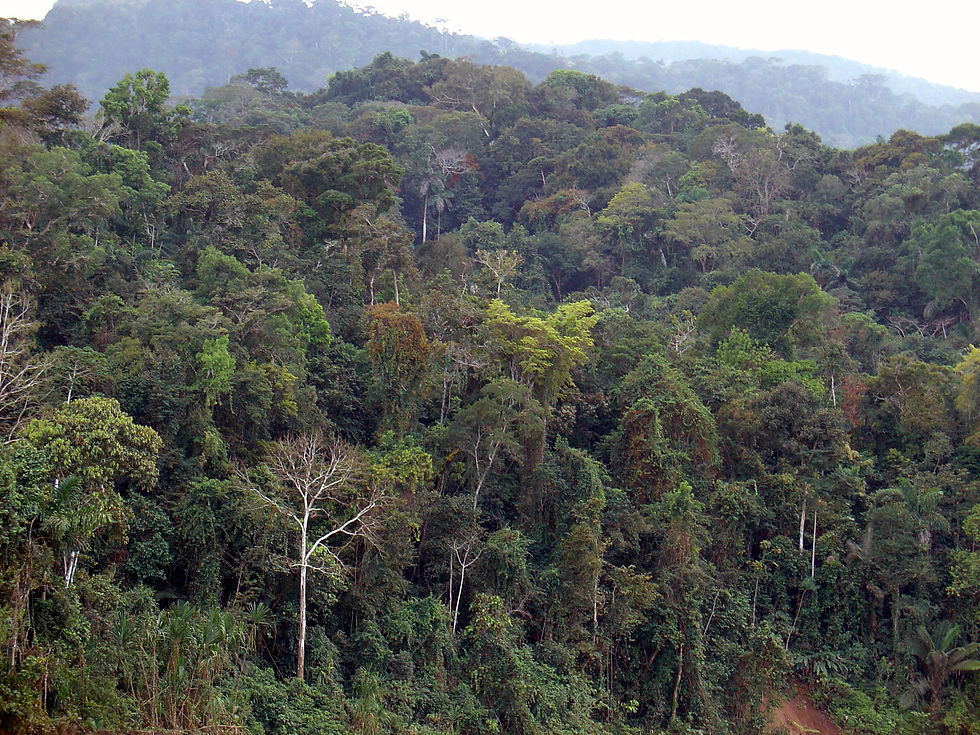
At the three lowland rainforest study plots, air temperature fell from 23.2°C on 12 June to a daily mean of 13.2°C within a single day, reaching a minimum of 10.5°C on 14 June. In a temperate region, a temperature of around 10°C may not seem severe, but for animals that have spent their evolutionary history in tropical lowlands, it lies close to the edge of their usual experience. The researchers also monitored temperature along an elevational gradient from 245 to 3588 m.a.s.l. and found that the cold wave signal could be traced clearly up to 2254 m.a.s.l. Soil temperature also declined, although the drop was less pronounced than in the air, with the lowest recorded soil temperature remaining at 20.3°C. This means that the rainforest surface and soil environment provided some buffering, giving small animals potential refuges where they could hide and avoid the coldest conditions.
To understand the ecological impact of the cold wave, the researchers compared animal data collected before, during and after the event. They used Malaise traps to sample flying insects, and baited pitfall traps with human dung, chicken carrion and fermented banana to collect ground-dwelling insects and other arthropods. They also used camera traps to record the activity of wild mammals. In addition, the team measured the critical thermal minima and maxima of insects—that is, the temperatures at which insects lost their locomotive ability during gradual cooling or heating. These experiments included insects from Coleoptera, Diptera, Hymenoptera, Lepidoptera, Hemiptera and Orthoptera, allowing the researchers to distinguish between a true mortality event and a temporary reduction in activity.

During the cold wave, the activity or capture rates of nearly all measured animal groups declined markedly. The total wet biomass of flying insects collected by Malaise traps dropped sharply, and the ground-dwelling arthropods collected in baited pitfall traps also decreased substantially. The researchers had also planned to collect moths using light traps, but this had to be abandoned during the cold wave because almost no insects were attracted to the light. For several days, the rainforest became unusually quiet, and even the researchers' direct observations suggested very low animal activity. Camera trap data likewise showed declines in both the number of recorded wild mammal individuals and the number of mammal species detected.
These declines, however, do not necessarily mean that animals died in large numbers. Low-temperature tolerance assays showed that, on average, insects would lose locomotive ability only at around 6.2°C, leaving a thermal safety margin of about 4.3°C above the recorded environmental minimum of 10.5°C. Moreover, all insects tested for cold tolerance regained movement within one hour after being returned to room temperature. For most insects, then, the 2023 cold wave probably reduced activity rather than causing widespread mortality. In the following field season, the flying insect biomass collected by Malaise traps recovered to pre-cold-wave levels; most arthropods from baited pitfall traps also increased again; and mammal activity and species richness returned to previous levels. Together, these patterns support the interpretation that the cold wave mainly caused a temporary reduction in activity for much of the rainforest animal community.
Still, this does not mean rainforest animals are entirely safe. Some insects were already very close to their lower thermal tolerance limits. Among the least cold-tolerant quarter of the tested insects, the average distance between their critical thermal minimum and the recorded cold-wave minimum of 10.5°C was only 0.62°C. If future cold waves become more intense or last longer, some tropical insects may cross their physiological threshold and suffer substantial mortality.
Dung beetles were the most concerning group in this study. Compared with other insects, their total wet biomass dropped sharply during the cold wave and had still not recovered by the following sampling season. The researchers suggested that some species may already have been lethally affected, or at least experienced developmental delays. Lowland specialists such as the large dung beetle Coprophanaeus lancifer, whose distribution is associated with warmer low-elevation environments, may be especially vulnerable to cold-wave events.

Because mammals are endotherms and can regulate their body temperature, they are less likely to be killed directly by a cold wave. Yet their reduced activity during the event still points to ecological costs. Being active under unusually cold conditions may require more energy, and reduced insect activity may also temporarily limit food availability. Smaller mammals such as pacas (Cuniculus paca) may remain in burrows, where temperature drops are less pronounced than in the open air. Previous cold wave events in the Amazon have also been associated with mortality in some bird species, particularly specialized insectivores that may have been affected indirectly by the decline in insect activity.

The Amazon rainforest does not face only heat-related stress. Climate change may also intensify temperature fluctuations, making cold waves stronger. The 2023 cold wave did not cause a long-term collapse of most animal communities, showing that rainforest animals can be highly resilient. Yet vulnerable groups such as dung beetles may still suffer ecologically meaningful impacts. If future extreme events become more frequent, last longer, or push temperatures closer to the physiological limits of local animals, the rainforest ecosystem may face damage that is far more serious than a few quiet days in the forest.
Author: Shui-Ye You
Reference:
Holzmann KL et al. (2025). Cold waves in the Amazon rainforest and their ecological impact. Biology Letters.


Comments