
Noncoding RNAs (ncRNAs): A Molecular Group That Influences Animal Longevity?
- 演化之聲

- Mar 12
- 4 min read
Why can humans live close to a century while mice survive for less than five years? Despite sharing more than 80% of orthologous protein-coding genes, the lifespan difference between the two species is striking. Previous research has largely focused on protein-related gene regulation in attempts to identify molecular determinants of longevity. However, these approaches have not sufficiently explained the vast lifespan differences observed among species. In recent years, studies of noncoding RNAs (noncoding RNA, ncRNA) have expanded rapidly, revealing that these RNA molecules, which are not translated into proteins, play critical roles in cellular regulation and may even influence the evolutionary trajectory of entire life cycles.
To investigate this possibility, researchers integrated lifespan data for 4,215 animal species from the AnAge Database and collected the corresponding genome sequences and annotation files from the National Center for Biotechnology Information (NCBI). After filtering for samples with complete genome sequences and annotations, 333 species remained for analysis. By standardizing and performing regression analyses on the total genomic length of ncRNA regions and protein-coding regions, the researchers examined whether the proportions of these two genomic components were associated with lifespan. The results revealed no positive correlation between the proportion of protein-coding sequences and lifespan; in fact, the relationship was negative. In other words, genomes containing a larger proportion of protein-coding regions tended to be associated with shorter lifespans. In contrast, the proportion of ncRNA showed a significant positive correlation with lifespan, suggesting that increases in ncRNA content follow a stable evolutionary trend accompanying lifespan extension. For example, the total ncRNA length in the human genome exceeds that of the mouse genome by more than 2.6-fold, while the difference in protein-coding regions is comparatively small.
To further understand this evolutionary relationship, the researchers also incorporated mitochondrial genome data into their analysis. The results showed that, in mammals, increases in ncRNA content were significantly negatively correlated with mitochondrial genome length. Because mitochondria are the central sites of cellular energy production, this pattern—greater ncRNA abundance accompanied by shorter mitochondrial genomes—may indicate that species evolve longer lifespans by adopting metabolic strategies that reduce energy expenditure while improving metabolic efficiency. This pattern is consistent with the energy-based view of aging: biological systems with higher energetic demands are often associated with shorter lifespans, whereas systems that operate with lower energy consumption tend to favor longevity.
To identify molecular features that might directly explain this phenomenon, the researchers constructed an ncRNA motif frequency matrix covering 333 species and 20,480 possible sequence combinations. These motifs consist of nucleotide arrangements composed of six to seven bases and were designed to capture characteristic differences among ncRNA sequences across species. The choice of six- or seven-base motifs balances statistical power: longer sequences would occur too rarely to enable meaningful cross-species comparisons, while shorter sequences would appear so frequently throughout genomes that they would provide little discriminatory power.
Using the FINET (Fast Inferring NETwork) algorithm, the study identified four motifs most strongly associated with lifespan. Two motifs were associated with long-lived species—GGTGCG and CGTATA—while two others were associated with shorter lifespans—ACGTCG and TCTCTC. As species evolve toward longer lifespans, the frequencies of the long-lived motifs gradually increase, whereas the short-lived motifs progressively disappear. This finding suggests that ncRNA sequences themselves undergo directional evolutionary selection rather than remaining random or evolutionarily conserved fragments, as traditionally assumed.
A comparison between humans and mice illustrates these differences clearly. In the human genome, the frequency of long-lived motifs is much higher than in mice. For instance, the motif GGTGCG appears more than 2,000 times in human noncoding regions but only about 400 times in mice. In humans, the distribution of GGTGCG across chromosomes forms a gradient: its frequency is lowest on the Y chromosome and gradually increases toward other chromosomes, reaching its highest abundance on chromosome 2. In contrast, the distribution across mouse chromosomes is relatively even, showing far less pronounced gradients. This cross-chromosomal gradient suggests that human genome evolution not only increased the number of certain ncRNAs but also reorganized their chromosomal distribution patterns.
Among human ncRNA genes, the three containing the highest numbers of GGTGCG motifs are CASC15, LINC02934, and ENSG00000286481. CASC15 alone contains 69 of these longevity-associated motifs. Expression analyses revealed that CASC15 is most active in the endometrium, ovary, and cerebral cortex, whereas LINC02934 and ENSG00000286481 are primarily expressed in the testes. Historically, CASC15 has been regarded as a cancer-related gene because its expression is elevated in hepatocellular carcinoma, non-small-cell lung cancer, gastric cancer, thyroid cancer, melanoma, and other malignancies. However, this study proposes that CASC15 should instead be redefined as a gene promoting longevity rather than merely being considered a cancer-associated factor. The tissue-specific expression patterns of these ncRNA genes also suggest that lifespan extension may be closely linked to the nervous and reproductive systems.
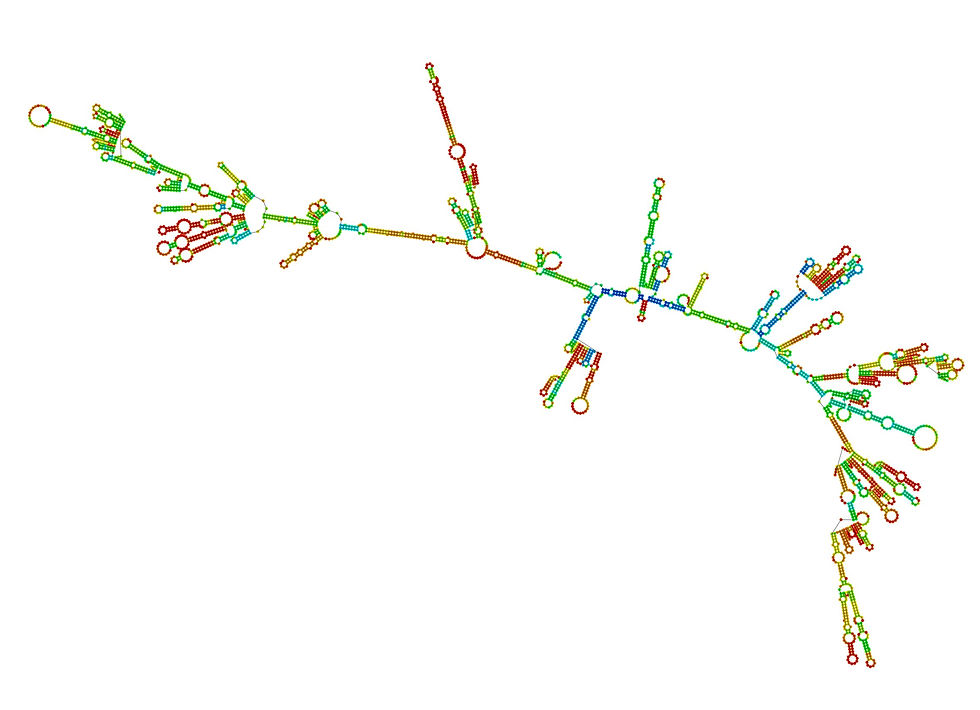
From the earliest stages of life on Earth, ncRNAs have served as central molecules governing biological metabolism. Beyond regulating gene expression, they influence energy metabolism, cellular stability, and reproductive mechanisms. Compared with proteins, ncRNAs require transcription of only four nucleotides and do not frequently rely on ATP-driven enzymatic reactions, which may result in lower energetic costs. This property aligns with the previously described pattern of reduced energy consumption combined with improved metabolic efficiency.
It should be emphasized that the current study relies primarily on large-scale computational analyses and statistical models, and its conclusions have not yet been validated through biological experiments. Future studies integrating cellular experiments and animal models will be necessary to clarify the specific mechanisms through which ncRNAs influence energy metabolism, gene regulation, and tissue-specific expression patterns.
Author: Shui-Ye You
Reference:
Anyou Wang. (2025). Noncoding RNAs evolutionarily extend animal lifespan. Global Medical Genetics.



Comments