
Texas Banded Gecko

Updated: Apr 10

The Texas banded gecko (Coleonyx brevis) is a small, nocturnal gecko native to the southwestern United States, including Texas and southern New Mexico, as well as northern Mexico in regions such as Chihuahua, Coahuila, and Durango. Adults typically reach a total length of approximately 10–12 cm, with females often slightly larger than males. Their bodies are slender, featuring vertical pupils and movable eyelids. Unlike many common geckos, they lack adhesive toe pads, meaning they cannot climb smooth surfaces such as glass and are therefore strictly terrestrial.
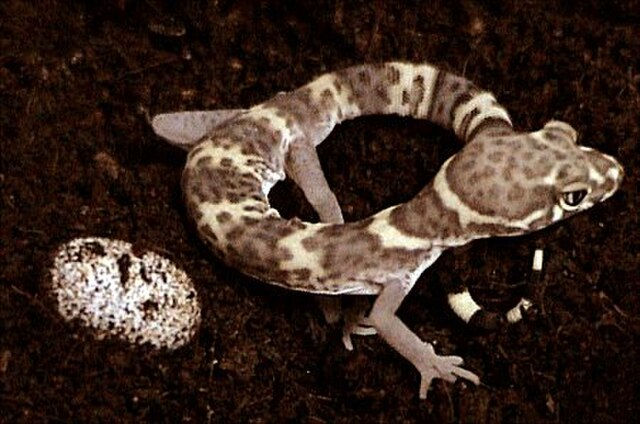
Their base coloration ranges from yellow and pale pink to light brown, marked with distinct dark crossbands. As they mature, these bands gradually transform into spotted patterns. This coloration provides effective camouflage within dry, rocky habitats. In the wild, they favor arid, rocky terrain, often inhabiting gravel piles, rock crevices, or low shrub areas, and may also take shelter beneath debris or human-made structures. During the day, they remain hidden, becoming active at night when temperatures drop.
They are carnivorous, feeding primarily on small arthropods such as termites, crickets, moths, spiders, and small beetles. During hunting, they raise their bodies and rapidly flick their tongues to sense the environment. Once prey is detected, they approach in short bursts before striking quickly with a downward bite, often subduing prey with head shaking. Since their feeding activity is concentrated within 3–4 hours after sunset, they typically adopt an opportunistic feeding strategy and are not particularly selective.
When threatened, they raise and rapidly wave their tails. If danger escalates, they may autotomize their tail to distract predators and escape. The tail regenerates over several weeks, though its appearance differs slightly from the original. Additionally, they can emit sharp squeaking sounds, which may function as a defensive mechanism or a form of social communication.
Due to their small size and generally docile nature, they have gradually entered the reptile hobby. However, compared to the more commonly kept leopard gecko, they remain relatively uncommon in the pet trade, increasing their rarity and appeal among enthusiasts.
Housing Requirements in Captivity
In captivity, the enclosure should closely replicate their natural habitat. A single individual should be housed in a horizontal glass terrarium of at least 60 × 45 × 45 cm. For pairs or groups, a larger enclosure is required to prevent conflict. Multiple males should never be housed together, as this can lead to serious aggression.
Suitable substrates include a sand–clay mixture or fine reptile sand, which allows natural digging behavior while minimizing injury risk. The substrate depth should be at least 7–8 cm to facilitate burrowing.
Environmental enrichment is essential for their well-being. Rocks, bark, hollow wood, or artificial caves provide effective hiding spots. Both dry and moist hides should be available, allowing the gecko to choose. As they are sensitive to light, it is recommended to cover three sides of the enclosure to reduce exposure and stress.
Daytime temperatures should be maintained between 24–30°C, with a localized basking area reaching 32–35°C. Nighttime temperatures can drop to around 20°C. A heat mat combined with a low-wattage daylight bulb can create a suitable thermal gradient. Although nocturnal, moderate UVB exposure is beneficial for vitamin D3 synthesis, supporting immune function and bone health.
Humidity should be kept relatively low at 30–40% for general conditions. A moist hide containing damp coconut fiber or sphagnum moss should maintain humidity above 70% to assist with shedding. Prolonged high humidity in the enclosure should be avoided, as it may lead to respiratory infections.
A shallow water dish must be provided at all times, with water changed daily and the dish cleaned regularly to prevent bacterial growth.
Feeding Conditions
Texas banded geckos are insectivores and should be offered a varied diet in captivity. Common feeder insects include crickets, Dubia roaches, black soldier fly larvae, mealworms, silkworm larvae, and small locusts. Prey size should not exceed the width of the gecko's head to prevent choking or intestinal blockage. Juveniles should be fed daily, while adults can be fed every other day, offering an amount they can consume within approximately 15 minutes.
All feeder insects should be gut-loaded with vegetables, fruits, or commercial diets prior to feeding to enhance their nutritional value. Calcium powder and vitamin supplements should be lightly dusted onto the insects, particularly those containing vitamin D3, to prevent metabolic bone disease. Generally, calcium supplementation is recommended every 2–3 feedings, while vitamin supplements should be provided once per week, with more frequent supplementation for growing juveniles.
Feeding can be done by releasing live insects into the enclosure to stimulate natural hunting behavior. However, excessive numbers should be avoided to prevent insects from biting the gecko. Alternatively, forceps feeding allows precise control of intake and monitoring of individual feeding responses. Uneaten insects should be removed promptly to maintain enclosure hygiene.
During shedding, they often consume their shed skin, which is a natural behavior that provides nutrients and reduces scent detection by predators. No intervention is necessary, but if incomplete shedding is observed, humidity should be slightly increased or retained skin gently removed with a moist cotton swab.
Breeding Conditions
Texas banded geckos are oviparous, with breeding typically occurring from late spring to summer. Males display courtship behaviors such as short vocalizations or body vibrations to attract females. After successful mating, females usually lay 1–2 eggs within several weeks, burying them in moist substrate. The relatively large egg size reflects significant maternal investment.
In captivity, a separate laying box filled with moist coconut fiber or vermiculite should be provided, maintaining humidity at 70–80%. Eggs can be carefully removed and incubated at a constant temperature of 26–28°C, hatching in approximately 60 days. Hatchlings resemble adults but are smaller and should be fed appropriately sized prey such as fruit flies or pinhead crickets.
Breeding places significant energetic demands on females, often resulting in noticeable weight loss after egg-laying. Caregivers should provide nutrient-rich food and additional calcium supplementation to support recovery. If breeding is not intended, males and females should not be housed together long-term to avoid excessive reproduction and associated stress.
Preventing Invasive Spread
Although native to southern North America, Texas banded geckos are present in the international pet trade. If released or abandoned in regions with similar climates, they may impact local insect populations or compete with native small reptiles, posing a potential ecological risk.
Therefore, keepers must adhere to a strict no-release policy. If unable to continue care, the animal should be rehomed to an experienced keeper or transferred to a qualified animal rescue organization. Releasing them into the wild is unacceptable, as responsible ownership includes safeguarding both the animal and the integrity of local ecosystems.
Author: Shui-Ye You


Comments