The Bubble-Net Feeding Culture of Humpback Whales

Many animals do not rely solely on instinctive behaviors. Instead, they can acquire new behaviors through observation and interaction with others. This transmission of information and behaviors through social learning, often referred to as animal culture, can enhance individual survival and improve a population's ability to adapt to environmental changes. Consequently, understanding these behaviors has important implications for biodiversity conservation.
Among the various behaviors transmitted through social learning, foraging techniques are particularly important. Novel feeding strategies can increase foraging efficiency, broaden the range of available prey, and reduce dependence on specific food resources. Such behaviors have been documented in numerous animal groups, including fishes, birds, and mammals, with especially well-known examples occurring in primates and cetaceans.

Among baleen whales, the humpback whale, Megaptera novaeangliae, is currently the only species for which there is strong evidence of widespread social learning. In addition to their famous whale-song culture, humpback whales have developed a variety of feeding techniques, such as lobtail feeding in the North Atlantic and trap feeding near Vancouver Island, Canada. These behaviors may also be acquired through social learning, although definitive evidence has remained limited.
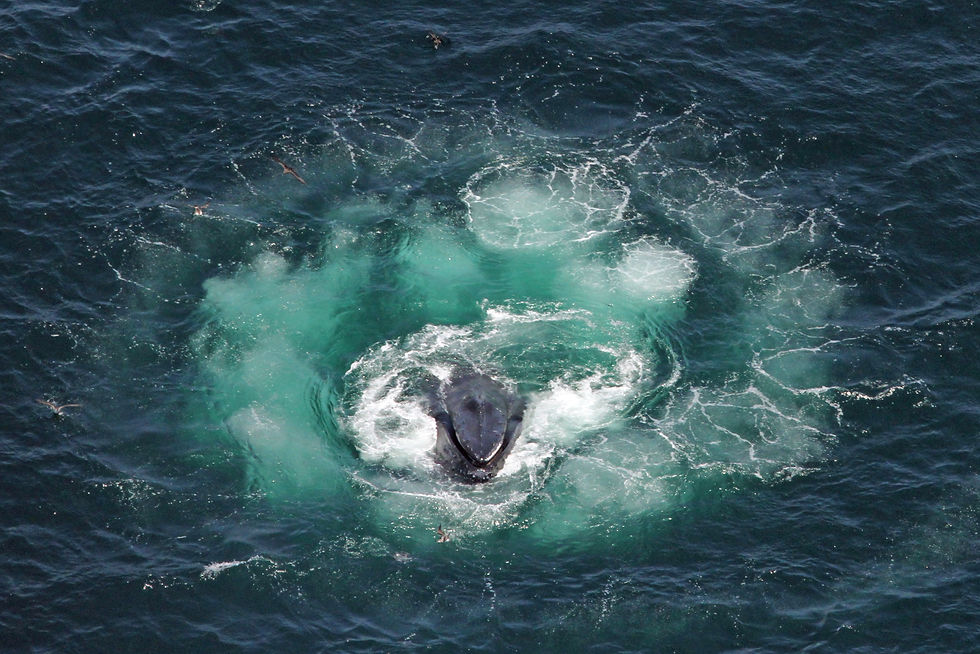
The most famous of these behaviors is bubble-net feeding. During this behavior, humpback whales dive beneath schools of fish or krill and swim in circles or spirals while releasing bubbles, thereby creating a "net" that concentrates the prey before the whales surge upward to feed. Bubble-net feeding may occasionally be performed by a single individual, but it is often carried out cooperatively by several whales, displaying a notable degree of coordination and division of labor.
Want to read more?
Subscribe to thesoundofevolution.com to keep reading this exclusive post.