
Two Hundred Million Years Ago, Fern Savannahs Along the Laurasian Seaway Burned Repeatedly at the End of the Triassic

About 201.3 million years ago, as the Triassic Period drew to a close, Earth experienced the end-Triassic mass extinction. At the time, enormous volcanic activity associated with the Central Atlantic Magmatic Province (CAMP) is estimated to have released roughly 100,000 gigatonnes of CO₂. The main phase of magmatic activity lasted for about 400,000 years and involved approximately 1 million cubic kilometres of magma intruding into the crust or erupting at the surface. Previous studies have estimated that this activity drove global warming of about 3–4°C, while atmospheric CO₂ partial pressure may have risen from roughly 600 ppm to 2,250 ppm.
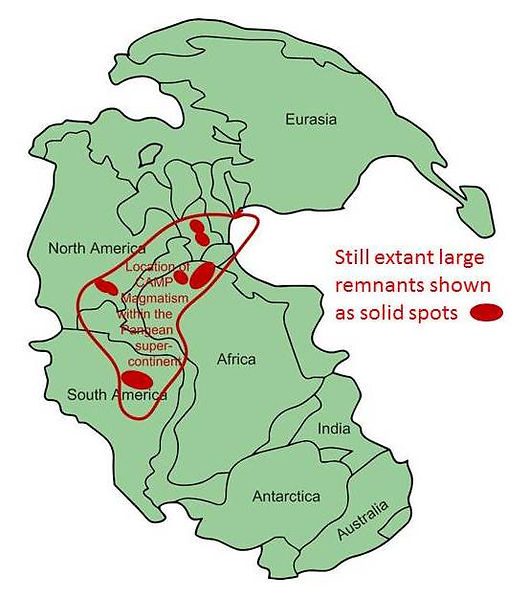
Marine and terrestrial animals were severely affected by this environmental crisis, but the pattern among plants was somewhat different. The fossil record does not indicate widespread extinction of plant families over a short interval, yet pollen and spore records reveal substantial regional turnover in vegetation. Across much of Europe, forests dominated by conifers underwent major decline and were rapidly replaced by pioneer vegetation composed largely of ferns and lycopods. In some strata, fern spores suddenly become extremely abundant, producing what palaeobotanists refer to as a "fern spike."
Want to read more?
Subscribe to thesoundofevolution.com to keep reading this exclusive post.


