
Understanding Cyclospora Through U.S. Food Contamination Events: A Parasite Hidden in the Fresh Produce Supply Chain

Recent reports have once again raised concerns about food contaminated with Cyclospora cayetanensis in the United States. Looking beyond the latest incident, however, it becomes clear that this parasite has repeatedly entered the U.S. fresh produce supply chain. In 2019, the United States reported 2,408 cases of cyclosporiasis, with some outbreaks linked to imported basil. Another 1,241 cases were reported in 2020, including a large cluster associated with bagged salad mixes containing carrots, red cabbage, and iceberg lettuce. In 2021 and 2022, another 1,020 and 1,129 cases, respectively, were linked to leafy greens. By 2023, an additional 2,272 cases could not be traced to a specific crop. Together, these figures show that Cyclospora has become a persistent hazard in modern fresh food systems.

Cyclosporiasis is caused primarily by C. cayetanensis, a single-celled eukaryotic parasite in the phylum Apicomplexa that is currently regarded as highly specific to humans. Infected people shed unsporulated oocysts in their feces. These oocysts are approximately 8–10 micrometers in diameter and are generally not infectious when they first leave the human body. They must remain in the environment for approximately 7–14 days and undergo sporulation before they can infect another person. As a result, Cyclospora is less readily transmitted directly and immediately from a patient to family members or housemates than many other gastrointestinal pathogens. An outbreak usually indicates that oocysts from human feces first entered water, soil, or an agricultural environment, matured over time, and were subsequently transferred to food.
This obligatory environmental maturation period also makes source tracing particularly difficult. After consuming contaminated food, a person typically does not develop symptoms for about a week. By the time patients seek medical care, laboratory results become available, and enough cases accumulate to reveal a cluster, several weeks may have passed since the original contamination event. The implicated produce may already have been distributed to multiple states, stores, and restaurants. Consequently, cyclosporiasis outbreaks often span several states, requiring epidemiologists to reconstruct patients' histories of eating salads, fresh herbs, berries, and other raw produce and then compare those histories with complex production and distribution records. Contamination at the farm level is also rarely distributed evenly across every item or surface. It is more often localized and sporadic, so testing at the source does not always yield a positive result.
When a person ingests mature, sporulated oocysts in contaminated produce or drinking water, the oocysts excyst in the small intestine and release sporozoites. These sporozoites invade epithelial cells of the small intestine and begin asexual replication, a process known as merogony or schizogony. During this stage, the sporozoites develop into meronts, also called schizonts. Within an infected cell, a meront undergoes repeated nuclear division followed by cellular segmentation, producing numerous merozoites. These merozoites are exceptionally small, measuring less than 5 micrometers in length and approximately 1 micrometer in width.
Once a mature meront ruptures, the merozoites are released. Some invade nearby intestinal epithelial cells, develop into new meronts, and begin another round of asexual replication. Cyclospora may pass through more than one generation of merogony. After several rounds, some merozoites enter the sexual phase of the life cycle, known as gametogony, and differentiate into male microgamonts and female macrogamonts. The male stages produce flagellated microgametes, which fertilize the female macrogametes to form zygotes. Each zygote then develops into an unsporulated oocyst, which is shed in the host's feces. Only after undergoing sporulation outside the body does the oocyst become infectious again.


By invading the epithelium of the small intestine, Cyclospora disrupts the intestinal barrier and induces inflammation. Tissue samples from infected patients may show villous blunting, inflammation of the lamina propria, and parasites at several developmental stages within apical enterocytes. Damage to the intestinal villi reduces the absorption of nutrients and water, while impaired barrier function contributes to watery diarrhea, bloating, abdominal cramping, nausea, fatigue, loss of appetite, and weight loss. Some patients also experience vomiting, headaches, or flu-like symptoms, and the diarrhea may persist or recur.
Death is uncommon, but prolonged diarrhea can lead to dehydration and malnutrition. Infants and young children, older adults, and people with weakened immune systems face greater risks. Immunocompromised patients are also more likely to experience prolonged illness, fever, and substantial weight loss. The standard clinical treatment is a combination of trimethoprim and sulfamethoxazole, commonly referred to as trimethoprim-sulfamethoxazole or TMP-SMX.

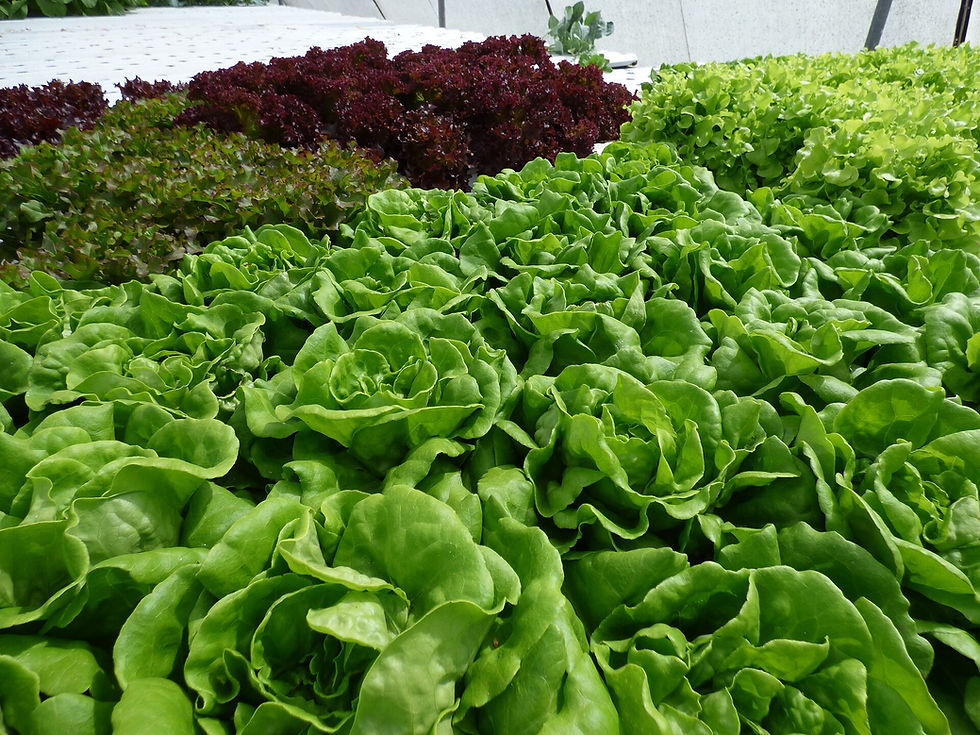
Leafy greens, berries, and fresh herbs such as basil and cilantro frequently serve as vehicles of transmission because of how they are grown, processed, and eaten. These crops may come into direct contact with soil, are often irrigated with agricultural water, receive only limited processing after harvest, and are commonly eaten raw. When irrigation water is contaminated with human feces, overhead irrigation can deposit oocysts directly onto edible plant surfaces. Poorly managed postharvest wash water or cooling water can also spread a small amount of contamination to a much larger volume of produce. Inadequate toilets, handwashing facilities, or hygiene training for farmworkers, along with leaks in sanitation infrastructure, may provide additional routes by which oocysts enter the production environment.
Water is therefore a critical component of the transmission chain. Under suitable conditions, Cyclospora oocysts may remain viable in water for approximately two months, and temperatures of about 22–32°C appear favorable for sporulation. During a multistate U.S. outbreak associated with leafy greens in 2020, investigators identified a canal in southern Florida as a possible source of contamination. When large volumes of water repeatedly come into contact with crops, even low-level contamination can accumulate into a public health event. Most U.S. cases also occur from late spring through summer, a seasonal pattern that may reflect the combined effects of temperature, rainfall, crop production cycles, and environmental conditions that support oocyst sporulation.
It may seem intuitive that washing produce several times should eliminate the risk, but current evidence does not support that assumption. Cyclospora oocysts have a durable wall that makes them difficult to remove or inactivate through ordinary washing and commonly used chemical sanitizers. Chlorine-based disinfectants, at concentrations that are effective against bacteria, also have limited activity against protozoan oocysts. High temperatures can inhibit oocyst sporulation, but heat treatment can cause leafy greens, basil, raspberries, and similar products to wilt, soften, or lose color. Such treatments are therefore difficult to apply while preserving the quality expected of fresh produce. Control measures must begin further upstream, with water quality, farm sanitation, and processing controls, instead of relying on the consumer's final rinse.
Food testing has gradually shifted from microscopic examination to highly sensitive molecular methods. Cyclospora oocysts display blue-green autofluorescence under ultraviolet excitation, allowing experienced personnel to recognize them microscopically. However, microscopy has limited sensitivity when only a few oocysts are present in a food sample. The U.S. Food and Drug Administration later adopted a real-time quantitative PCR assay targeting the Mit1C region of the mitochondrial cox3 gene. This method improved upon earlier assays targeting the 18S rRNA gene, which could cross-react with other protists.
Finding Cyclospora in food can resemble looking for a needle in a haystack. Contamination is often present at very low concentrations, and the oocysts may be distributed unevenly. Testing a small subsample may therefore fail to represent an entire lot. Organic matter in leafy greens and water samples can interfere with DNA extraction or inhibit PCR reactions, producing false-negative results (see note). Differences in washing, elution, and concentration procedures affect how many oocysts can be recovered from a sample, while the efficiency of the subsequent DNA extraction step influences whether the parasite can ultimately be detected by PCR.
Cyclospora is not solely an American problem. A meta-analysis that included 150 datasets from 42 countries and 166,611 participants estimated the pooled global prevalence of C. cayetanensis infection at approximately 3.4%. The pooled prevalence was 5.9% in Africa, 7.6% in low-income countries, and 0.4% in high-income countries. Children had an estimated risk of infection approximately 1.5 times that of adults. Because diagnostic methods, study populations, and sampling designs varied considerably among locations, these figures should not be interpreted as fixed risks for every country. They nevertheless show that sanitation infrastructure, access to clean water, and surveillance capacity have a profound influence on the burden of disease.
Effective control requires a connected system of measures covering human waste management, agricultural water quality, farm toilets and handwashing facilities, worker training, postharvest water management, lot sampling, molecular testing, and distribution traceback. Washing fresh produce still has general hygienic value, but it cannot guarantee the removal of Cyclospora. Anyone who develops persistent watery diarrhea after eating fresh produce—particularly when symptoms are prolonged or recurrent—should seek medical care promptly and report their recent food history. Doing so can help clinicians identify a parasite that may otherwise be missed by routine testing.
Note: PCR, or polymerase chain reaction, is a technique used to amplify a specific DNA sequence. Starting with a small amount of DNA, primers, DNA polymerase, and other reagents are subjected to repeated heating and cooling cycles. Within a few hours, this process can generate millions to billions of copies of the same DNA fragment.
Author: Shui-Ye You
References:
Almeria S et al. (2023). Cyclospora cayetanensis: A Perspective (2020-2023) with Emphasis on Epidemiology and Detection Methods. Microorganisms.
Chen Y et al. (2024). The global prevalence of Cyclospora cayetanensis infection: A systematic review, meta-analysis, and meta-regression. Acta Trop.
Herwaldt B. (2000). Cyclospora cayetanensis: a review, focusing on the outbreaks of cyclosporiasis in the 1990s. Clinical Infectious Diseases.
McCaughan KJ and Kniel KE. (2025). Current Knowledge and Future Directions for Cyclospora cayetanensis Research and Its Surrogates. Compr Rev Food Sci Food Saf.
Tsang OTy et al. (2013). Cyclospora infection in a young woman with human immunodeficiency virus in Hong Kong: a case report. BMC Research Notes.
Zhou Y et al. (2011). Prevalence and molecular characterization of Cyclospora cayetanensis, Henan, China. Emerg Infect Dis.


Comments