
The Sound of Evolution
Amantadine
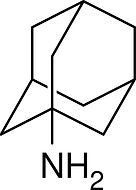
Mechanism of action:
1. Antiviral mechanism: Amantadine inhibits the M2 proton channel of influenza A virus, thereby blocking viral uncoating and preventing the release of viral RNA into the cytoplasm. However, influenza A viruses have now developed widespread resistance to amantadine.
2. Anti-Parkinsonian mechanism: The mechanism of Amantadine in Parkinson's disease is not fully understood. It may promote dopamine release and inhibit dopamine reuptake, thereby increasing dopamine levels in the basal ganglia. It can also antagonize N-methyl-D-aspartate (NMDA) receptors, reducing glutamate-induced excitotoxicity.
Reference(s):
1. Li L et al. (2014). In vitro interaction of clopidogrel and its hydrolysate with OCT1, OCT2 and OAT1. Int J Pharm.
2. Harrach S et al. (2016). MATE1 regulates cellular uptake and sensitivity to imatinib in CML patients. Blood Cancer J.
3. Goralski KB et al. (2002). The cation transporters rOCT1 and rOCT2 interact with bicarbonate but play only a minor role for amantadine uptake into rat renal proximal tubules. J Pharmacol Exp Ther.