
The Sound of Evolution
Atropine
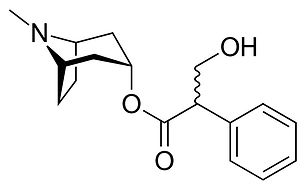
Mechanism of action:
Atropine is a non-selective muscarinic acetylcholine receptor antagonist. It competitively blocks the action of acetylcholine at all muscarinic receptor subtypes (M₁ to M₅), thereby suppressing parasympathetic activity. This can lead to tachycardia, mydriasis, relaxation of bronchial smooth muscle, reduced mucus secretion, decreased smooth muscle peristalsis, reduced gastric acid secretion, relaxation of the detrusor muscle of the bladder, urinary retention, dry mouth, dry skin, and increased body temperature.
Reference(s):
1. Buels KS et al. (2012). Muscarinic receptor antagonists: effects on pulmonary function. Handb Exp Pharmacol.
2. Kanto J et al. (1988). Pharmacokinetic implications for the clinical use of atropine, scopolamine and glycopyrrolate. Acta Anaesthesiol Scand.