
Efficient Proton Leak Thermogenesis in Sea Otter Skeletal Muscle Enables Survival in Cold Oceans

Updated: Apr 10
Maintaining body temperature in cold marine environments is a fundamental challenge for all marine mammals. For the sea otter (Enhydra lutris), the smallest marine mammal, this challenge is particularly severe. Water conducts heat far more efficiently than air, and temperatures in the North Pacific typically remain between 0 and 15°C. Under such conditions, body heat is lost rapidly. Unlike cetaceans and pinnipeds, sea otters lack a thick insulating layer of subcutaneous blubber. Instead, they depend on extremely dense fur that traps air and forms a barrier between the skin and the surrounding cold water. Yet fur alone cannot fully prevent heat loss. To maintain a stable core body temperature, sea otters must therefore generate large amounts of metabolic heat.
Consistent with this need, the basal metabolic rate of sea otters is approximately three times higher than that predicted for a terrestrial mammal of similar body mass. For many years, however, the physiological mechanism underlying this unusually high metabolic rate remained unclear.

In mammals, skeletal muscle constitutes a large proportion of total body mass and possesses substantial metabolic capacity, making it a major determinant of whole-body basal metabolism. Muscle can generate heat through two main mechanisms. One involves muscle contraction and shivering, known as shivering thermogenesis. The other is non-shivering thermogenesis, which occurs through several biochemical pathways. One important mechanism involves proton channel proteins located in mitochondria. In human skeletal muscle, the uncoupling protein UCP3 plays a central role in this process. These proteins allow protons in the mitochondrial intermembrane space to leak back into the mitochondrial matrix, a process known as proton leak. Because this proton flow bypasses ATP synthesis, the energy stored in the proton gradient is released as heat. Additional cellular processes, such as sodium-potassium pumping by Na⁺/K⁺-ATPase and calcium transport into the sarcoplasmic reticulum via Ca²⁺-ATPase, also contribute to heat generation. Researchers therefore proposed that the extraordinary metabolic rate of sea otters might result from unusually strong proton leak in skeletal muscle mitochondria.

To test this hypothesis, investigators collected cranial tibial muscle samples from sea otters inhabiting both northern and southern regions, including individuals spanning a wide range of ages and body masses. They then used high-resolution respirometry to measure mitochondrial respiratory capacity in the skeletal muscle.
The results revealed that mitochondrial proton leak in sea otter skeletal muscle is exceptionally strong. Approximately 40 percent of the oxidative phosphorylation capacity that would normally be used to produce ATP is instead diverted into non-shivering thermogenesis. This proportion is far higher than in most mammals. In fact, it exceeds that measured in Alaskan sled dogs by roughly fourfold and is comparable only to extremely small mammals. These findings indicate that mitochondrial proton leak in skeletal muscle is the primary source of the sea otter's unusually high basal metabolic rate.
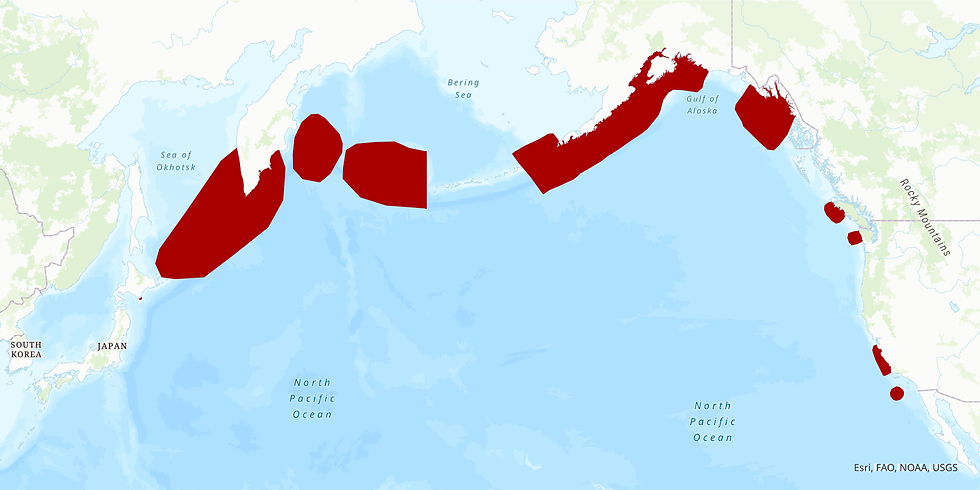
In most terrestrial mammals, newborns have underdeveloped skeletal muscles and limited thermogenic capacity. As a result, they rely primarily on brown adipose tissue for heat production. Marine mammals follow a different pattern. Newly born sea otters, which weigh only a little over one kilogram, already possess skeletal muscles with metabolic capacities close to those of adults, even though muscle mass and myoglobin concentrations do not reach adult levels until roughly two years of age. This early development of muscle metabolic capacity appears to be an evolutionary adaptation to the severe thermal pressures imposed by the cold marine environment. Only under unusual circumstances, such as in an elderly, emaciated individual with heavily worn teeth, did researchers observe a marked reduction in overall metabolic capacity.
When researchers further integrated mitochondrial proton leak capacity with estimates of total skeletal muscle mass, an interesting pattern emerged. In sea otters weighing more than about 9 kilograms, proton leak from skeletal muscle alone is sufficient to support the animal's metabolic heat production. In individuals weighing less than 9 kilograms, however, the proportion of muscle mass is smaller, and proton leak alone cannot fully meet thermogenic demands. In these smaller animals, additional heat must be generated through shivering or metabolic activity in other tissues.
Newborn sea otters possess dense natal fur and typically spend most of their time resting on their mother's abdomen, which reduces direct contact with cold seawater. During this early developmental stage, these behavioral and structural features help compensate for the limitations of thermogenesis.
Importantly, the elevated proton leak capacity in skeletal muscle does not appear to depend simply on muscle activity or physical training. One individual in the study had been raised in captivity since infancy and displayed far lower levels of activity than wild sea otters. Nevertheless, its muscle thermogenic metabolism was indistinguishable from that of wild individuals. This suggests that skeletal muscle metabolism in sea otters is regulated primarily by thermogenic demand rather than by mechanical workload.
From an evolutionary perspective, the metabolic strategy observed in sea otters represents a remarkable adaptation to life in cold marine waters. Among mammals weighing more than one kilogram, sea otters possess the highest recorded basal metabolic rate. Comparable metabolic intensities are otherwise found only in extremely small mammals such as shrews, which also face intense heat loss due to their high surface-area-to-volume ratios.
Author: Shui-Ye You
References:
Wright T et al. (2021). Skeletal muscle thermogenesis enables aquatic life in the smallest marine mammal. Science.
Pohl EE et al. (2019). Important Trends in UCP3 Investigation. Frontiers in Physiology.


Comments