
How did frogs without a tadpole stage evolve?

Frogs are often thought of as animals with a two-part life: they hatch as tadpoles, then undergo metamorphosis into four-limbed adult frogs. Yet in the evolutionary history of Anura, many frogs have taken a different route. They have removed the tadpole stage from their life cycle, allowing the embryo to develop directly inside the egg into a small frog. This pattern is known as direct development. It is typically characterized by eggs laid in terrestrial environments. In some species, embryos still retain ancestral tadpole-like features inside the egg, whereas in others the tadpole morphology is far less obvious. In practical terms, the tadpole stage and metamorphic stage have been incorporated into embryonic development, and this phase may also have become compressed. Direct-developing frogs also tend to produce fewer eggs, but those eggs are larger, contain more yolk, and allow the embryo to complete development by relying more heavily on yolk nutrition.

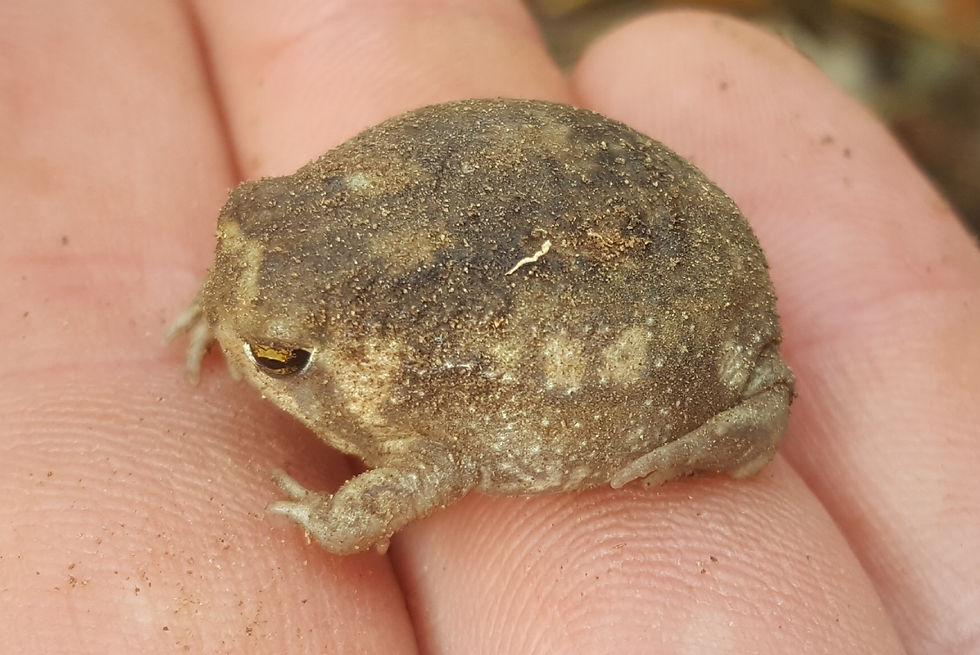
Among living anurans, direct development accounts for a substantial proportion of species and is scattered across multiple frog lineages. Direct-developing species occur in at least 22 families. Families such as Eleutherodactylidae, Brachycephalidae, and Craugastoridae are often listed among the major groups in which direct development is common. Most sooglossids have also lost the tadpole stage, although some species still retain a tadpole phase. In addition, although most microhylids still have tadpoles, some species, such as Breviceps adspersus, the rain frog often kept as a pet, have evolved direct development. This distribution shows that direct development did not arise only once in frogs. It evolved independently, multiple times, in different anuran families.
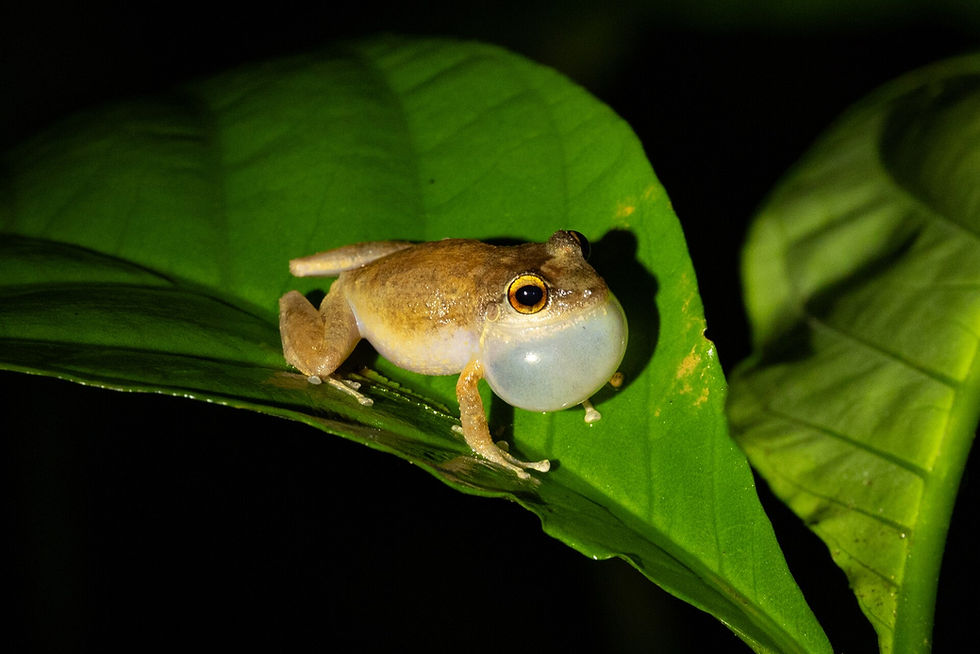
The Puerto Rican tree frog, Eleutherodactylus coqui, offers a clear example of tadpole-like morphology during embryonic development. Its eggs take about 17 to 26 days to hatch into froglets. During roughly the first 14 days, the embryos still retain a tail, rudimentary gills, and an operculum, the flap-like structure that covers the developing forelimbs in tadpoles. Yet these structures no longer serve their original tadpole functions. The tail is no longer used for swimming; instead, it has been co-opted as a surface for gas exchange inside the egg. Many common tadpole-specific structures are absent from E. coqui embryos, including the cement gland, hatching gland, lateral line organs, a long coiled intestine, suprarostral cartilages, tadpole teeth, and the scraping beak. After about day 14, the embryo begins to look distinctly frog-like: the eyes and jaws develop in an adult-like direction, and prominent limb buds appear shortly after neurulation.
This transformation involves heterochrony, a change in the timing of developmental events. Frog metamorphosis is strongly influenced by thyroid hormone, especially triiodothyronine, or T3. Under the influence of this hormone, many tadpole tissues regress, while frog tissues gradually form and mature. Direct-developing frogs shift this hormone-driven tissue response into embryonic development. The underlying mechanism involves changes in upstream and downstream gene regulation, along with a reordering of tissue developmental programs. In E. coqui, the hypothalamic-pituitary-thyroid axis is already functional during mid-to-late embryogenesis. Nuclear receptors such as thyroid hormone receptor α and thyroid hormone receptor β are also upregulated earlier than in frogs with typical tadpole development. When embryonic cells receive T3 through these thyroid hormone receptors, they activate the regression and apoptosis of tadpole tissues while accelerating the maturation and growth of frog tissues.

The evolutionary path toward direct development, however, is not as simple as once imagined. Traditional hypotheses often pictured this transition as a gradual movement away from water. In that view, the ancestral condition involved aquatic eggs and aquatic tadpoles. This was followed by eggs laid outside the water, for example on leaves above water or near streams, with tadpoles later returning to the water. A further step involved terrestrial eggs and terrestrial larvae, such as larvae developing in foam nests. Only after these intermediate stages would the tadpole be lost, producing direct development. This pathway may apply to some lineages, but large-scale phylogenetic comparative studies show that the real evolutionary history of frogs is more complex. Direct development often evolved from ancestors that laid eggs on land, yet some lineages are also inferred to have evolved direct development directly from fully aquatic breeders. Frogs therefore did not always pass step by step through every stage of terrestrialization. In some lineages, direct-developing species may have evolved over a relatively short evolutionary interval.
The selective pressures most often discussed as drivers of direct development are biotic factors, especially predation and competition. Water bodies are breeding sites, but they also come with serious risks. Eggs and tadpoles are exposed to many predators, including fishes, aquatic insects, and larvae of other amphibians, and mortality can be high. If the available water bodies are small, dense populations of tadpoles in ponds or streams can intensify competition, affecting growth rate, timing of metamorphosis, and survival. In unstable aquatic habitats, drying can create a severe survival bottleneck. For frog lineages living under these conditions, bypassing the aquatic stage can become a better solution, especially because terrestrial environments offer more space and a broader range of potential resources. Land is not free of danger, of course. Terrestrial eggs face desiccation, fungi, arthropods, and other predators. But evolution is shaped by lineages that leave surviving descendants, and the repeated evolution of direct development suggests that, in certain environments, land offered a relatively more favorable route.
Even after reproduction moved onto land, it remained easier in warm, humid regions. Amphibian eggs lack the amnion and shell membranes that protect amniote eggs, so terrestrial eggs must avoid water loss. If the environment is too dry, survival becomes difficult or impossible. Many direct-developing frogs therefore reproduce in moist leaf litter, moss, caves, arboreal microhabitats, and other sites that can retain moisture. In this sense, they did not entirely escape dependence on water. They transformed dependence on open water bodies into dependence on humid microenvironments.
Direct-developing frogs resemble amphibians poised at the edge of a more terrestrial life, echoing the ancient evolutionary trend by which early tetrapods reduced their dependence on aquatic larvae. These two cases differ in many physiological and developmental details, but they share a common challenge: how to reorganize embryonic development so that the embryo can obtain nutrients, exchange gases, avoid desiccation, and reproduce without being tied to open water. Perhaps in the future, these frogs may continue along this path and give rise to a form of terrestrial life unlike that of reptiles.

Author: Shui-Ye You
References:
Elinson RP. (2001). Direct development: an alternative way to make a frog. genesis.
Fontana RB et al. (2022). Revisão do desenvolvimento direto em anuros: A evolução de uma estratégia reprodutiva. Oecologia australis.
Gomez-Mestre I et al. (2012). Phylogenetic analyses reveal unexpected patterns in the evolution of reproductive modes in frogs. Evolution.
Liedtke HC et al. (2022). The evolution of reproductive modes and life cycles in amphibians. Nature Communications.
Saponaro F et al. (2020). Selective Thyroid Hormone Receptor-Beta (TRβ) Agonists: New Perspectives for the Treatment of Metabolic and Neurodegenerative Disorders. Frontiers in Medicine.


Comments