
Lovebirds

Updated: Apr 10
The genus Agapornis, commonly known as lovebirds, is a small group of parrots belonging to the family Psittaculidae, the Old World parrots. At present, nine species are recognized. Most species occur across mainland Africa, while the grey-headed lovebird (A. canus) is native to Madagascar. The name “lovebird” originates from their strong pair-bonding behavior: individuals often perch closely beside their partners for long periods, creating the romantic association reflected in their common name. In the wild, they usually form small flocks of a dozen to several dozen birds that forage and travel together. Their diet primarily consists of seeds, fruits, young plant shoots, and grains from agricultural crops.
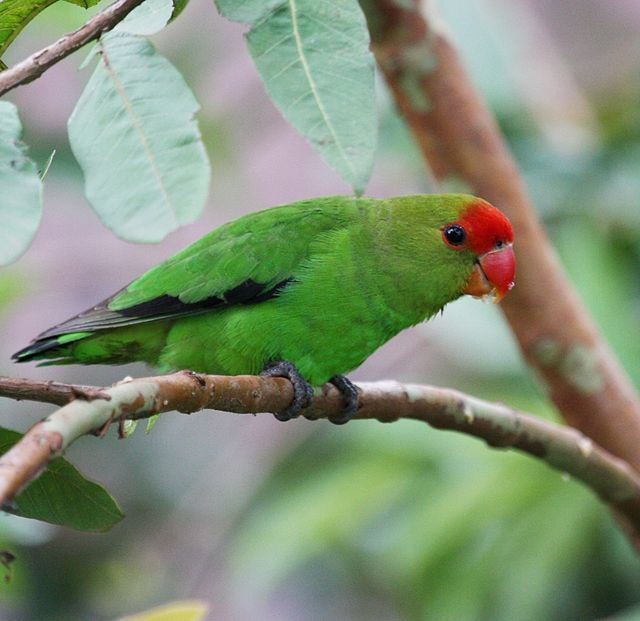
Lovebirds are small parrots, with an average body length of approximately 13–17 cm and a body mass of about 40–60 grams. Their wingspan can reach around 24 cm. They have a compact body, short tail feathers, and a large, strong beak. Wild-type plumage is mainly bright green, although different species show distinctive coloration on the head or neck. For example, the peach-faced lovebird (A. roseicollis) has an orange-red face, while the yellow-collared lovebird (A. personatus) and Fischer's lovebird (A. fischeri) possess conspicuous white eye-rings. Under captive breeding conditions, long-term selective breeding has produced many color mutations, including blue, yellow, and even entirely white forms. In recent years, at least thirty color variations have been recognized.
In natural environments, lovebirds inhabit African savannas, dry woodland, and agricultural areas. They may move seasonally but are not true migratory birds; their movements generally follow the distribution of water sources. Breeding commonly occurs during the dry season. Females select nesting sites in tree cavities, rock crevices, or cracks in dead wood, using grass stems and bark fibers to construct nests. A typical clutch contains 3–8 eggs, incubated by the female for about 23 days. After hatching, both parents feed the chicks, which usually leave the nest after a little more than one month. Information on lifespan in the wild is limited, but under captive conditions lovebirds commonly live for more than 15 years.




Housing Requirements in Captivity
In household environments, lovebirds are extremely active birds that require ample space for movement. Although small in size, they are agile flyers and climbers, so the enclosure must be large enough to allow them to fully spread their wings and move freely. For a single bird, a cage measuring at least 45 cm in length and width and 60 cm in height is recommended, while a pair requires a larger enclosure. Multiple perches should be provided inside the cage, with variation in thickness and material. Natural branches are particularly suitable because they allow the birds to exercise their toes and naturally wear down their claws.
The cage should be placed in a well-ventilated location with adequate lighting but protected from prolonged direct sunlight and strong drafts. Indoor temperatures comfortable for humans are generally suitable, roughly between 18 and 26 °C. At night, covering the cage with cloth is recommended to reduce disturbances. Lovebirds require ultraviolet light from sunlight to synthesize vitamin D3. If regular outdoor exposure is not possible, a full-spectrum bird lamp that includes UVB should be used, providing approximately 10–12 hours of light each day.
Beyond the cage structure itself, various toys and enrichment items should be provided. Lovebirds are intelligent and curious animals, and insufficient environmental stimulation may lead to behavioral problems such as feather plucking or excessive screaming. Safe materials such as paper strips, wooden blocks, rope knots, or destructible toys allow them to express natural behaviors. Owners should ideally allow their birds time outside the cage each day for exercise, while ensuring the environment is safe. Open windows, hot stoves, and exposed water sources should be avoided to prevent accidents.
Feeding Conditions
In the wild, lovebirds mainly consume seeds, fruits, and agricultural grains. Under captive conditions, a varied diet is essential for maintaining health. Specialized formulated pellets should form the dietary foundation, ideally comprising more than sixty percent of the total food intake, as these provide balanced nutrition. Fresh vegetables and fruits can be offered as supplements, including carrots, spinach, bell peppers, apples, grapes, and papaya. Red, yellow, and orange produce contains abundant vitamin A, which is particularly important for feather and skin health. Calcium can be supplied through cuttlebone or other calcium supplements designed for birds.
Seed mixtures are best provided only as treats or in small quantities. A diet composed primarily of seeds may lead to nutritional imbalance or obesity. Limited amounts of nuts such as walnuts, almonds, and hazelnuts can serve as additional energy sources, but should not be excessive. Foods that must be strictly avoided include avocado, chocolate, and any items containing caffeine, all of which are toxic to parrots. High-salt or high-fat foods should also be avoided.
Fresh drinking water is essential. Mineral water or boiled, dechlorinated water should be replaced daily, since lovebirds require consistent hydration, particularly in warm weather. Water dishes should be cleaned every day to prevent bacterial growth. Fruits and vegetables must be thoroughly washed to remove pesticide residues and cut into appropriate sizes before feeding. Any uneaten fresh food should be removed within several hours to prevent spoilage and digestive problems.
Breeding Conditions
Lovebirds form extremely stable pair bonds and often remain with the same partner for life. When a mature pair is kept together under suitable conditions, they may begin breeding naturally. Females typically collect materials such as paper fragments, grass stems, or wood chips to build nests and will lay eggs inside a nest box. Owners therefore need to provide a suitable nest box along with nesting materials. Each clutch usually contains 3–8 eggs. The female performs incubation, while the male supplies food during this period.
If breeding is not desired, nest boxes should not be provided, and owners should periodically check for egg laying. If eggs appear, they may be removed and replaced with artificial eggs to prevent repeated laying that could deplete the female's nutritional reserves. When intentional breeding is planned, a clean and secure nest box must be prepared, along with sufficient nutritional support, particularly calcium. Without adequate calcium intake, females may suffer from egg binding, a dangerous condition that requires immediate veterinary treatment.
Newly hatched chicks are naked and entirely dependent on parental feeding. Human disturbance should be minimized during this period. In cases where hand-rearing becomes necessary, such as when chicks are abandoned by their parents, specialized hand-feeding formulas and controlled-temperature environments are required. These procedures can be challenging for inexperienced owners, so breeding and chick rearing are generally recommended only for keepers with adequate experience.
Preventing Invasive Spread
Lovebirds are native to Africa, but due to the global pet trade, populations have appeared outside their natural range. Irresponsible releases, abandonment, or escaped birds have established feral populations in several regions. These populations may negatively affect local ecosystems by competing with native small birds for habitat and food resources. For example, peach-faced lovebirds have established feral populations in places such as Phoenix in the United States and the Canary Islands in Spain.
For this reason, responsible ownership is essential. Pet birds should never be released into the wild or deliberately abandoned, as this can contribute to invasive species problems. If an owner can no longer care for the bird, it should be transferred to a legitimate animal rescue organization or rehomed to another suitable caretaker rather than released outdoors. Parrots are highly intelligent animals with strong emotional attachment to their caregivers. Abandonment can cause severe psychological stress to the bird. Anyone considering keeping a parrot should therefore be prepared to provide lifelong care and should never acquire a pet impulsively without respect for the life involved.
Author: Shui-Ye You


Comments