
Structural Colors in Bird Feathers
- 演化之聲

- Mar 13
- 4 min read
Updated: Apr 10
The colors observed on animals are generally produced through two different mechanisms. One mechanism is pigmentary coloration, in which pigments generate color by selectively reflecting and absorbing certain wavelengths of light. Molecules such as melanin, carotenoids, and rhodopsin belong to this category. The resulting color depends on the chemical structure of the pigment molecules, and these pigments may originate either from dietary sources or from compounds synthesized within the animal's body.
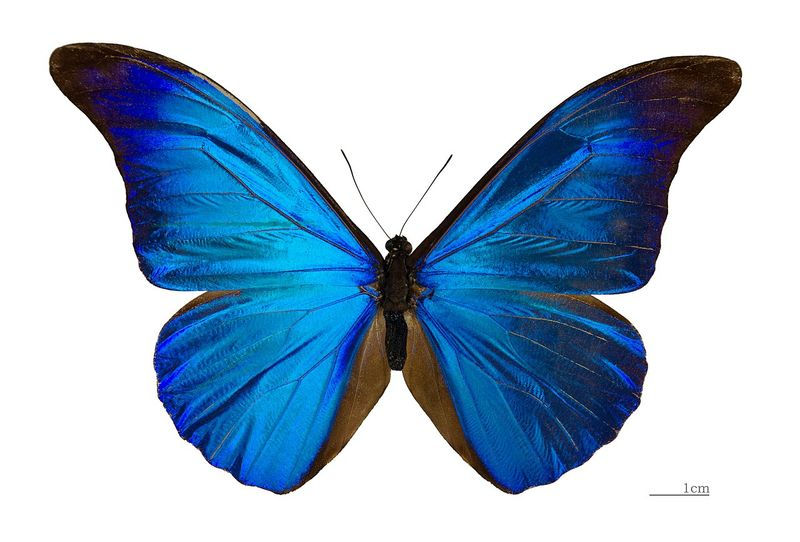
The second mechanism is structural coloration, which arises from interactions between light and microscopic physical structures rather than from pigments. In this case, the spatial geometry of microscopic structures produces color through optical processes such as reflection, interference, scattering, or diffraction. These structures typically have dimensions comparable to the wavelength of visible light, allowing them to selectively reflect particular wavelengths.

Bird feathers provide a particularly striking example of structural coloration. Feathers are primarily composed of β-keratin, a strong fibrous protein that can form a wide variety of microscopic geometries. When light strikes a feather, these nanostructures interact with the incident light, producing distinctive optical effects. In many cases, the observed color changes with viewing angle, creating the phenomenon known as iridescence.
Structural coloration in bird feathers can generally be categorized into three main types: thin-layer interference, multilayer interference structures, and amorphous network structures.
Thin-layer interference represents the simplest mechanism. In this arrangement, the color originates from a single thin layer within the feather's microscopic structure. When light reaches the layer, a portion of the light is reflected from the upper surface while another portion passes through the layer and reflects from the lower surface. The two reflected waves then combine. Depending on their phase relationship, the waves may reinforce each other (constructive interference) or partially cancel each other (destructive interference). This interference alters the intensity of particular wavelengths, producing iridescent color effects similar to those seen on soap bubbles.
A classic example of this mechanism can be found in the neck feathers of the rock dove (Columba livia). The microscopic thickness of the outer cortex layer surrounding melanin granules determines which wavelengths undergo constructive interference. As the viewing angle changes, the effective optical path length changes as well, leading to visible shifts between blue-green and purple hues.
A second mechanism involves multilayer interference structures. In this configuration, several layers with different refractive indices are stacked in a regular sequence. When light enters such a layered system, reflections occur at multiple interfaces between layers. These reflected waves interact with each other, producing constructive interference at specific wavelengths. Because multiple reflections contribute to the interference pattern, the resulting reflection can become extremely strong within a narrow wavelength band, producing vivid and saturated colors.
One well-known example of multilayer interference occurs in the jewel beetle (Chrysochroa fulgidissima), whose metallic sheen results from layered structures within the cuticle. Similar physical principles appear in birds. In peacock feathers, for instance, melanin granules are arranged in ordered lattice structures within the feather barbules. These cylindrical granules form periodic arrays that act as photonic structures, selectively reflecting blue-green wavelengths of light. Variations in the spacing of these granules generate the diverse colors observed in different regions of the feather.
The third major type of structural coloration arises from amorphous network structures. Unlike multilayer systems, these structures lack long-range periodic order. Instead, they consist of irregular networks whose characteristic dimensions remain similar to the wavelength of light. Even though the arrangement appears random, the network still produces coherent scattering effects that selectively enhance certain wavelengths.
The blue feathers of the common kingfisher (Alcedo atthis) are a typical example. In these feathers, the color originates from a sponge-like keratin network located in the feather barbs. Although the structure appears irregular under microscopy, its nanoscale spacing allows scattered light waves to interfere constructively within a limited wavelength range, producing the bright blue coloration. Because the structure lacks long-range periodicity, the color is much less dependent on viewing angle, giving it a more uniform appearance rather than a strong iridescent shift.
In many bird species, structural coloration does not act alone but interacts with pigments to produce more complex visual effects. For example, the red-and-green macaw (Ara chloropterus) exhibits feathers whose two sides display different colors. The blue coloration originates from a structural network within the feather barbs, while the red color results from pigments deposited in adjacent structures. When these mechanisms combine, a single feather can display dramatically different colors depending on which side is observed.
Similarly, the green color of budgerigars (Melopsittacus undulatus) arises from a combination of structural blue coloration and yellow pigments. The structural component produces blue light, while the pigment filters the reflected wavelengths, resulting in the familiar green appearance. Such combinations of structural and pigmentary coloration are widespread in birds and contribute greatly to the diversity of plumage colors seen in nature.
Beyond visual display, structural coloration may also play functional roles related to feather performance. The microscopic architecture that produces color can influence how feathers interact with water, potentially enhancing water resistance. It may also affect how feathers absorb or reflect solar radiation, contributing to temperature regulation.
Thus, the remarkable colors of bird feathers emerge from intricate nanoscale architectures interacting with light. These structures demonstrate how biological materials can manipulate optical physics with extraordinary precision, producing visual effects that often rival or surpass those engineered by human technology.
Related microscopic images can be referred to: https://link.springer.com/chapter/10.1007/978-981-16-1490-3_11
Author: Shui-Ye You
Reference:
Yoshioka S and Akiyama T. (2021). Mechanisms of Feather Structural Coloration and Pattern Formation in Birds. Springer.


Comments