
Sun Conure

Updated: Apr 10

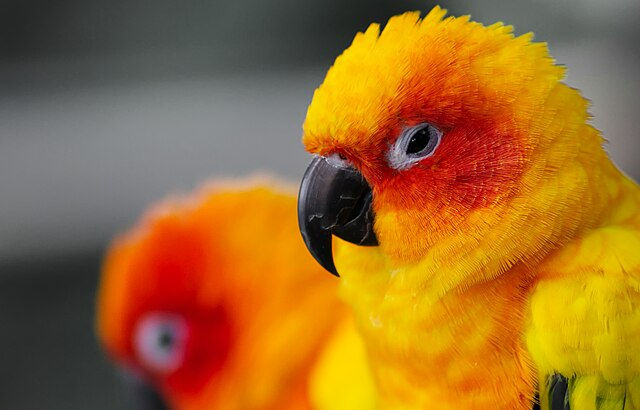
The Sun conure (Aratinga solstitialis) is a medium-sized parrot native to northern South America. Adult birds reach about 30 cm in length and typically weigh between 100 and 120 grams. Their plumage is exceptionally vivid: mature individuals are predominantly bright yellow, with orange-red coloration on the face and abdomen, while the wings and tail feathers are accented with green and blue. Juveniles are mostly green and gradually acquire the brilliant adult plumage between approximately one and a half to two years of age. Males and females appear nearly identical in external morphology, and sex determination usually requires genetic testing or surgical examination.
Sun conures are mainly distributed in northern Brazil, particularly in the state of Roraima, as well as southern Guyana, French Guiana, and parts of Suriname, with occasional records in southeastern Venezuela. They prefer tropical habitats below about 1,200 meters in elevation and are commonly found in dry savannas with scattered trees, riverside shrublands, or coastal forests. These parrots are highly social and usually occur in flocks of roughly 15 to 30 individuals, although larger gatherings may form when food resources are abundant.
They are diurnal birds, with peak activity during the early morning and late afternoon. During the day they spend time foraging, preening, playing, and interacting socially. Members of a flock often groom one another, share food, and rest in close proximity, reflecting their strong social bonds. Their brilliant plumage may appear conspicuous, yet when feeding among brightly flowering trees it can blend surprisingly well with the surrounding colors. In the wild, Sun conures have a varied diet consisting of fruits, flowers, seeds, and nuts, and they occasionally consume insects as an additional source of protein. During the breeding season, foods rich in protein and calcium become particularly important to support the health of both the female and developing chicks.
They typically nest in tree cavities, especially those found in palm trees. A clutch usually contains three to four white eggs, incubated by the female alone for about three to four weeks. The male remains nearby to guard the nest and provide food. Newly hatched chicks are entirely dependent on parental care and generally begin to gain independence approximately seven to ten weeks after hatching. The lifespan of wild populations is uncertain, but individuals kept in captivity may live for 25 to 30 years.
At present, the Sun conure is classified as Endangered by the International Union for Conservation of Nature (IUCN). Wild populations have declined sharply because of habitat loss and illegal capture for the pet trade. In fact, the number of individuals kept in captivity may now exceed those remaining in the wild. Anyone acquiring this species should choose birds bred in captivity in order to avoid contributing to further depletion of native populations.
Housing Requirements in Captivity
When kept as companion animals, Sun conures require ample space for movement and activity. Because they are naturally energetic, an appropriate enclosure should measure at least 75 cm in both length and width, with a height preferably exceeding 90 cm. The spacing between cage bars should not be too wide, as this may allow the bird's head to become trapped. Natural wooden perches should be placed inside the enclosure so the birds can rest, wear down their claws, and chew.
Environmental enrichment is equally important. Toys and interactive objects such as rope knots, chewable wooden toys, or foraging puzzles should be provided to prevent boredom. Without sufficient stimulation, parrots may develop behavioral problems such as feather plucking or excessive vocalization.
In addition to the cage, Sun conures require at least three hours of daily out-of-cage activity. A safe indoor flight area can be prepared, or supervised outdoor time may be provided using specialized flight harnesses and appropriate safety measures. Regular exercise helps them expend energy and maintain muscular health. Because these birds are highly social and rely heavily on companionship, keeping them in pairs is recommended if the owner cannot spend long periods interacting with them each day.
An indoor temperature between 18 and 27°C is generally comfortable. Birds should be protected from direct drafts and excessive heat. Sun conures also enjoy bathing; a shallow water dish can be provided daily, or a gentle mist spray can simulate natural rainfall. Regular bathing helps maintain feather cleanliness and can ease discomfort during molting periods.
Feeding Conditions
In the wild, Sun conures feed on a wide range of foods, and a similarly balanced diet is essential in captivity. High-quality formulated pellets should form the primary diet, accounting for roughly 70 percent of daily intake, as they provide a complete nutritional profile. The remaining 30 percent should consist of fresh fruits and vegetables such as apples, bananas, papaya, carrots, spinach, broccoli, and sweet potatoes.
Nuts such as almonds or walnuts can be offered as occasional treats or training rewards, but they should be given sparingly to prevent excessive fat intake. Feeding is usually best done twice daily, once in the morning and once in the evening, with portion sizes adjusted according to the bird's body size and activity level. Fruits and vegetables should be thoroughly washed to remove pesticide residues and cut into small pieces for easier consumption.
Certain foods must never be offered, including chocolate, coffee, alcohol, avocado, and salty foods, all of which are toxic to parrots. Peanuts should be given with caution because they are susceptible to contamination by aflatoxins. Leafy vegetables such as lettuce may be offered in small amounts, but excessive quantities can cause digestive discomfort.
During breeding periods or molting, additional calcium sources such as cuttlebone or mineral blocks should be available. Small amounts of protein-rich foods, including cooked egg whites, beans, or sprouted legumes, may also be added to the diet to support egg production and proper skeletal development in chicks.
Breeding Conditions
Sun conures usually reach sexual maturity at about two years of age and can breed readily in captivity. Once a compatible pair forms, they often display affectionate behaviors such as mutual preening and feeding. Prior to laying eggs, the female typically develops noticeable abdominal swelling, and a clutch usually consists of three to four eggs. Incubation is primarily carried out by the female, while the male guards the nesting site and provides food.
For owners whose birds begin breeding, a clean and secluded nest box should be provided. The interior should contain an appropriate layer of wood shavings and be kept dry and sanitary. During incubation, disturbance should be minimized, as excessive interference may cause the female to abandon the nest.
After hatching, chicks are best raised by their parents. Their eyes usually open around ten days after hatching. At approximately seven to eight weeks of age they develop full plumage and begin to leave the nest to practice flying, and they typically become fully independent around nine to ten weeks.
If the breeding pair does not receive adequate nutrition, the parents may damage or consume their own eggs. Therefore sufficient calcium and protein supplementation is extremely important. In captive breeding programs, if the number of chicks is too large or if parents abandon the brood, human intervention may be required. Specialized parrot hand-feeding formula and feeding equipment should be used, and proper temperature and humidity must be maintained throughout the process.
Preventing Invasive Spread
Because of their brilliant appearance and lively temperament, Sun conures are highly sought after in the international pet trade. However, if these birds are abandoned, intentionally released, or escape in regions outside their natural range, they may establish feral populations and potentially disrupt local ecosystems by competing with native birds for nesting sites and food resources.
For this reason, owners must follow the principle of responsible pet ownership: never abandon or release captive birds. If an owner can no longer care for a parrot, it should be transferred to a legitimate animal shelter or another qualified caretaker rather than released into the wild.
Parrots are intelligent animals that form strong emotional attachments to their caretakers. Abandonment can cause severe psychological distress. Anyone considering keeping a Sun conure must recognize the long-term commitment involved. With a lifespan that may reach 30 years, these birds should never be purchased on impulse or treated as disposable pets.
Author: Shui-Ye You


Comments