
The Origin of Insect Wings

Prior to the Carboniferous, insects were terrestrial arthropods lacking both flight muscles and articulated wing joints. With the onset of the Carboniferous, winged insects began to appear, and the earliest known fossil representative is Delitzschala bitterfeldensis, a member of the extinct order Palaeodictyoptera from the Serpukhovian stage, approximately 325 million years ago.


Early discussions on the origin of insect wings focused on two principal hypotheses. The first, the paranotal hypothesis, proposed that wings evolved from lateral extensions of the thoracic notum. The second, the tracheal gill hypothesis, suggested that wings originated from movable structures analogous to the tracheal gills of mayfly nymphs. The former implies a terrestrial origin: ancestral insects inhabiting vegetation may have possessed lateral, plate-like outgrowths that initially aided in thermoregulation by increasing surface area. Over time, these structures could have facilitated gliding and were eventually modified into actively flapping wings. In contrast, the tracheal gill hypothesis emphasizes an aquatic phase, proposing that mobile gill plates, already capable of oscillation and gas exchange, were later co-opted into flight structures.

Fossil evidence has refined this debate considerably. Palaeodictyoptera, among the earliest winged insect groups, provide critical insights into wing origins. These insects flourished during the Carboniferous and possessed two pairs of outstretched, veined wings, along with a pair of veined prothoracic lobes. Such features long supported the view that wings arose from dorsal thoracic expansions. Importantly, fossilized nymphs of palaeodictyopterans preserve developmental stages not observable in adults. These nymphs exhibit two pairs of wing pads on the thorax, as well as prothoracic lobes. Across different instars, the wing venation becomes progressively more defined, and the wing pads themselves show evidence of articulation, with mobility likely increasing as the organism matured.

Evidence from these nymphs indicates that insect wings did not derive solely from the dorsal thoracic region. The pleuron, or lateral body wall, also contributed to their origin. In this framework, insect wings and their articulations arose through the integration of dorsal and lateral body structures, subsequently refined through joint formation, venation, and muscular control to produce functional flight organs.

Traditionally, discussions of wing origin focused exclusively on the thorax, as adult wings are confined to the mesothorax and metathorax. However, detailed examination of palaeodictyopteran nymphs has revealed a previously overlooked feature: a շարք of lateral, plate-like extensions along the abdominal segments. These structures were long regarded as minor appendages and largely excluded from discussions of wing evolution. Recent studies, however, have shown that these abdominal extensions possess joint-like bases, allowing limited movement, and may even have been supplied with haemolymph. As a result, they are now interpreted as serial homologues of wings and are termed abdominal flaps. This suggests that early insects may have used a continuous շարք of thoracic and abdominal outgrowths, together with long antennae and caudal filaments, to control body posture and modulate gliding. Within this integrated system, true wings likely emerged through progressive specialization.
This reinterpretation also reshapes the tracheal gill hypothesis. Aquatic insect nymphs such as mayflies possess plate-like gills that share developmental genetic similarities with wings, and these have often been cited as evidence for a gill origin of wings. A revised view proposes that such abdominal outgrowths initially functioned in terrestrial insects as structures for gliding or physiological regulation, and were only later modified into respiratory organs in aquatic lineages. If this is correct, the origin of insect flight is more consistent with a terrestrial context, while tracheal gills represent a secondary adaptation rather than the primary source of wings.
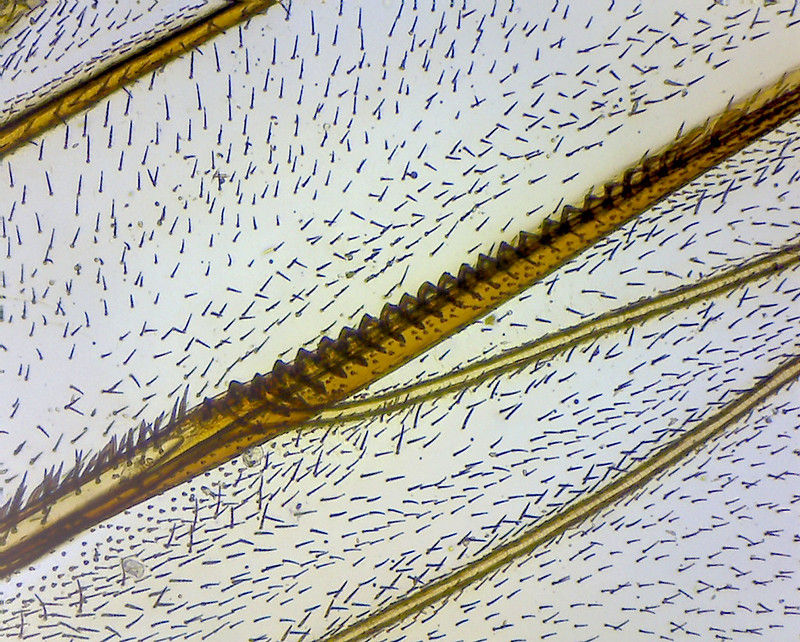
The emergence of powered flight required extensive anatomical innovation beyond the wings themselves. Mature insect wings consist of a thin cuticular membrane supported by a complex network of veins. These veins contain tracheae, nerves, and haemolymph, providing oxygen delivery, sensory input, and structural integrity. Thoracic flight muscles generate the oscillatory motion of the wings. Additional systems, including visual input, mechanosensory organs at the wing base, and the halteres of dipterans, evolved to support flight stability and maneuverability.
Once wings became fully functional, they profoundly altered the evolutionary trajectory of insects. Flight enabled them to overcome geographic barriers, evade ground-based predators, exploit new resources, and enhance dispersal, mating, and migration. Subsequent innovations further diversified wing function. In Neoptera, wings can be folded over the abdomen, allowing access to confined environments such as soil, bark, or crevices. In beetles, the forewings are modified into hardened elytra that protect the hindwings. In Diptera, the hindwings are transformed into halteres that detect rotational acceleration. In Hymenoptera, hook-like hamuli link the fore- and hindwings, enabling coordinated movement during flight. These evolutionary developments have produced an extraordinary diversity of flight mechanisms and contributed to the unparalleled success of insects as the most species-rich group of animals on Earth.
Author: Shui-Ye You
References:
Deepak R et al. (2024). Evolution of flight in insects. International Journal of Entomology Research.
Ross A. (2017). Insect Evolution: The Origin of Wings. Current Biology.
Ross A. (2022). Evolution: The origin of insect wings revisited. Current Biology.


Comments