
The Seal Killings Misunderstood for Decades

In the public imagination, seals are often regarded as adorable animals. With their round bodies and clumsy movements on land, they have become iconic symbols of cuteness. However, this charming appearance often causes people to forget an important fact: seals are genuine and formidable predators. Their diet is highly varied, including squid, fish, seabirds, and even other seals. In some situations, seals can display remarkably violent behavior, particularly during the breeding season, when aggressive incidents involving male seals are especially common.
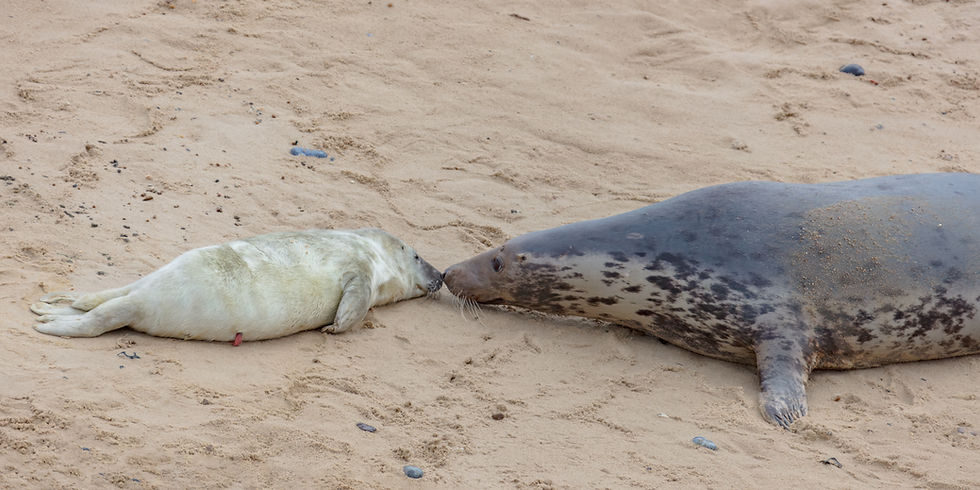
Since the 1980s, seal carcasses bearing severe injuries have been found throughout the northwestern Atlantic. Based on wound morphology and the presence of tooth fragments, some of these deaths were attributed to predation by the great white shark (Carcharodon carcharias). Most carcasses, however, exhibited distinctive spiral lacerations. These injuries were long thought to result from attacks by Greenland sharks (Somniosus microcephalus), while another hypothesis suggested that the wounds were caused by entanglement with ship propellers. It was not until 2016 that researchers directly observed the true cause of these corkscrew-shaped injuries: predation by gray seals (Halichoerus grypus). This discovery highlights the importance of accurately determining the causes of death in injured animals. Incorrectly attributing mortality to other predators or to human activities can lead to misguided conservation and management decisions.

Sable Island is currently home to the largest gray seal breeding colony in the world. Each year, during the breeding season from December to January, vast numbers of gray seals gather on the island, causing the local seal population to increase dramatically. Approximately 80,000 pups are born during this period. Adult females typically remain in relatively fixed locations on the North Beach, South Beach, or inland areas between them to care for their young, whereas adult males move more freely among different areas of the colony.
For many years, researchers have observed large numbers of dead gray seal pups on Sable Island during each breeding season. In 2023 alone, at least 765 pup carcasses were recorded. This persistent mortality raised an obvious question: what was killing so many young seals?

Gray seals are generally considered capital breeders, accumulating substantial fat reserves before the breeding season and then fasting for extended periods while relying on stored energy for survival and reproduction. During the rest of the year, they primarily feed on fish, cephalopods, and cartilaginous fishes, although opportunistic predation on seabirds has also been documented.
Researchers found that nearly all of the characteristic injuries previously observed on damaged seal carcasses also occurred on gray seal pups. These injuries included extensive skin and tissue stripping, tearing of the subcutaneous blubber layer, and the distinctive corkscrew-shaped wounds described earlier. Combined with video evidence collected in recent years showing male gray seals actively attacking and killing pups, the evidence strongly suggests that adult males are the primary perpetrators of these deaths.
Notably, some seal carcasses previously discovered on Sable Island and attributed to Greenland shark attacks because of their spiral wounds may have been misidentified. In light of recent observations, many of these injuries were likely inflicted by gray seals themselves.

Researchers propose that this cannibalistic behavior may be a learned strategy adopted by male gray seals during the breeding season. Because males fast while simultaneously competing intensely for mating opportunities, consuming readily available seal pups may provide an energetic advantage that helps sustain reproductive efforts. In other words, hungry males searching for mates may resort to feeding on nearby pups before returning to courtship and competition.
At present, there is no evidence that cannibalism by male gray seals has negatively affected overall population growth. Nevertheless, researchers emphasize the need for more detailed studies to fully evaluate the ecological consequences of this behavior.
Ultimately, the findings suggest that many assumptions about seal mortality on Sable Island may need to be reconsidered. There have been no widespread human slaughters of seals on the island in recent decades. Ship-related injuries may be less common than previously believed, and some supposed cases of Greenland shark predation may never have occurred. Instead, many of these deaths may simply be the result of predation by male gray seals themselves.
(Author: Bai Leng)
References:
1. Langley, I., Lidgard, D., Varkey, P., Sanchez, M., Rivard, M., den Heyer, C. E. (2026). Gray Seal Cannibalism at the Largest Colony in the World, Sable Island. Marine Mammal Science.
2. Luis Prada. (2026). Scientists Finally Found the Truth Behind the ‘Corkscrew’ Killings of Hundreds of Gray Seal Pups. Vice.


Comments