
Initial Response Measures for Snakebite

Snakebite envenomation, when viewed on a global public health scale, is a major yet persistently underestimated problem. Each year, tens of thousands of people die, and millions suffer varying degrees of envenomation, particularly in regions with limited access to healthcare. Once venom enters the human body, it can trigger a cascade of effects involving the nervous system, hematologic system, kidneys, and even the entire life-support system.
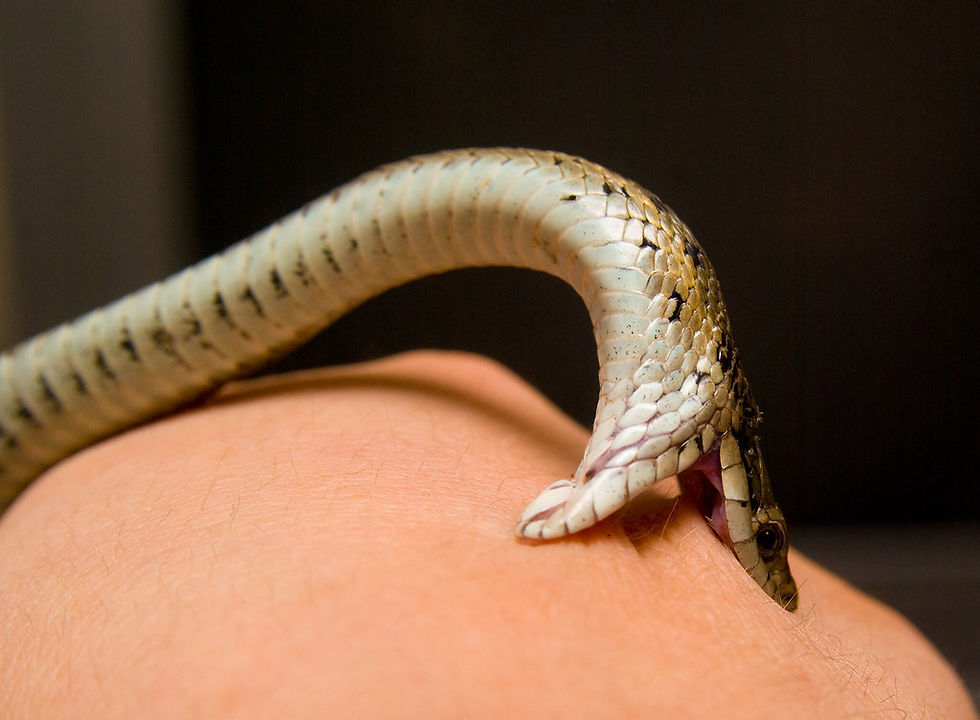
Snake venom exhibits diverse biological effects and can be broadly categorized into neurotoxic and hemotoxic types, while some species produce a combination of both. Neurotoxic venom primarily affects the nervous system, beginning with ptosis and blurred vision, and progressing to dysphagia, respiratory muscle paralysis, and ultimately respiratory failure. Hemotoxic venom disrupts coagulation pathways, leading to bleeding, internal hemorrhage, and even shock, while also contributing to muscle necrosis and renal injury. These manifestations are often delayed rather than immediate. Anxiety, physical activity, and elevated blood pressure following the bite can accelerate venom dissemination, making first aid a critical determinant of clinical outcome.
Many traditional practices, such as sucking out venom, cutting the wound, or applying herbal remedies, are not only ineffective but may also worsen tissue damage. Modern medical management has established a relatively clear and evidence-based approach. The core principles are to limit venom spread, maintain physiological stability, and ensure rapid transfer to a healthcare facility.
At the moment of a snakebite, the first priority is to keep the patient calm. Emotional distress increases catecholamine release, elevating heart rate and blood pressure, thereby facilitating venom circulation. Assistance should be sought immediately, and arrangements should be made for prompt transfer to a medical facility. Contrary to intuition, excessive movement is harmful, as muscle activity enhances blood flow and accelerates systemic distribution of venom. The affected limb should therefore be kept as still as possible.
The key principles are as follows:
First, remain calm and avoid panic. Emotional stability is essential, as panic-induced physiological responses may accelerate venom spread.
Second, seek help immediately and transfer the patient to a healthcare facility as soon as possible. Rapid access to medical care is critical for effective management.
Third, minimize physical activity. During transport, patient movement should be kept to a minimum. If a vehicle is available, the patient should ideally be transported lying down; sitting is a secondary option. If walking is unavoidable, effort should be made to prevent movement and exertion of the affected limb to slow venom dissemination through the blood and lymphatic systems.
Fourth, do not suck the wound or incise it. These methods are ineffective in removing venom and may cause additional tissue injury.
Fifth, avoid the use of pressure immobilization or apply it only with careful consideration. Evidence suggests that pressure immobilization may offer some benefit in cases of neurotoxic envenomation, but in hemotoxic bites it may increase local pressure and promote accumulation of high venom concentrations in tissues, potentially worsening necrosis. When the type of venom cannot be determined, its use should therefore be approached with caution. Tourniquets, on the other hand, are generally not recommended, as they can lead to local ischemia and tissue necrosis while offering limited benefit in improving clinical outcomes.
Sixth, avoid traditional or folk remedies. Substances such as herbs or animal excreta lack scientific support and may delay appropriate treatment.
Seventh, do not attempt to capture the snake. This is highly dangerous, as even a dead or decapitated snake may still inflict a bite through reflex action. If identification is necessary, a photograph can be taken, or the snake's characteristics can be noted and remembered.
Eighth, suction devices are largely ineffective and may be harmful. After the fangs penetrate the tissue and withdraw, the puncture sites are rapidly sealed by surrounding tissue structures. Consequently, suction devices remove only negligible amounts of venom and may increase local tissue damage. Their use is therefore not recommended.
Upon arrival at the hospital, a comprehensive evaluation is performed, including assessment of vital signs, neurological status, bleeding manifestations, and laboratory investigations such as complete blood count, coagulation profile, and renal function tests. These findings help determine the extent and severity of envenomation. In the absence of clear systemic manifestations, management is primarily supportive, including oxygen therapy, airway maintenance, fluid administration, and vasopressors when necessary to stabilize blood pressure.
When systemic envenomation is evident, antivenom therapy becomes the most important treatment. Antivenoms are immunoglobulins derived from animals that have been hyperimmunized with snake venom. These antibodies neutralize circulating toxins and reduce venom-induced damage. However, antivenom administration is not without risk. As a foreign protein, it may induce allergic reactions, including anaphylaxis, and must therefore be administered under close medical supervision.
Beyond acute management, the long-term consequences of snakebite should not be overlooked. Some patients may suffer permanent sequelae, including limb amputation due to necrosis, chronic renal failure, vision loss, and endocrine dysfunction. Snakebite envenomation is therefore not merely an acute medical emergency but can represent a life-altering event. The most effective strategy remains prevention, including avoiding high-risk environments and adopting appropriate protective measures.
Author: Shui-Ye You
References:
Amaral CFS et al. (1998). Tourniquet ineffectiveness to reduce the severity of envenoming after Crotalus durissus snake bite in Belo Horizonte, Minas Gerais, Brazil. Toxicon.
Barman DD. (2025). A Review of the Management Strategies and Practices in Snake Envenomation. Journal of Indian Academy of Forensic Medicine.
衛生福利部急救和緊急狀況處理,https://www.nhi.gov.tw/ch/cp-2770-54417-2951-1.html


Comments