
The parental dilemma of albatrosses: when is the best time to leave?
- 演化之聲

- Apr 14
- 5 min read
Albatrosses of the family Diomedeidae are long-lived birds, many of which commonly survive for more than 50 to 60 years. They breed at a low frequency, lay only a single egg at a time, and invest several months in chick rearing. Raising each chick is therefore extremely costly, and much of parental behaviour revolves around two central questions: how long the brood-guarding period should last, and when it is appropriate to leave the chick unattended for extended periods.
When chicks first hatch, they are unable to regulate their own body temperature and must rely on parental brooding for warmth, while also depending on their parents for protection against predators. During the brood-guarding period, albatrosses therefore adopt a biparental system in which the two parents alternate between guarding the chick and foraging at sea. As long as one parent remains at the nest, the other must forage alone. Only once the chick has grown sufficiently, and the brood-guarding period comes to an end, do both parents begin to forage simultaneously, leaving the chick alone at the nest.

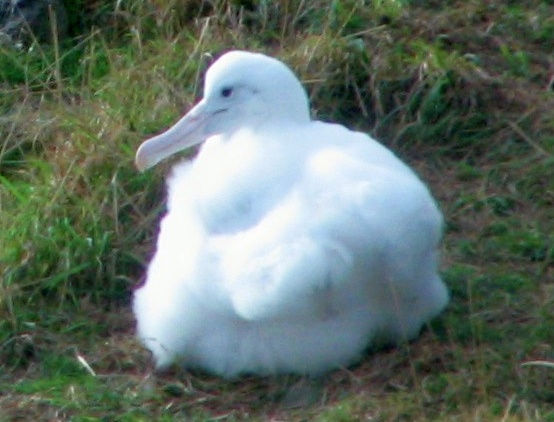
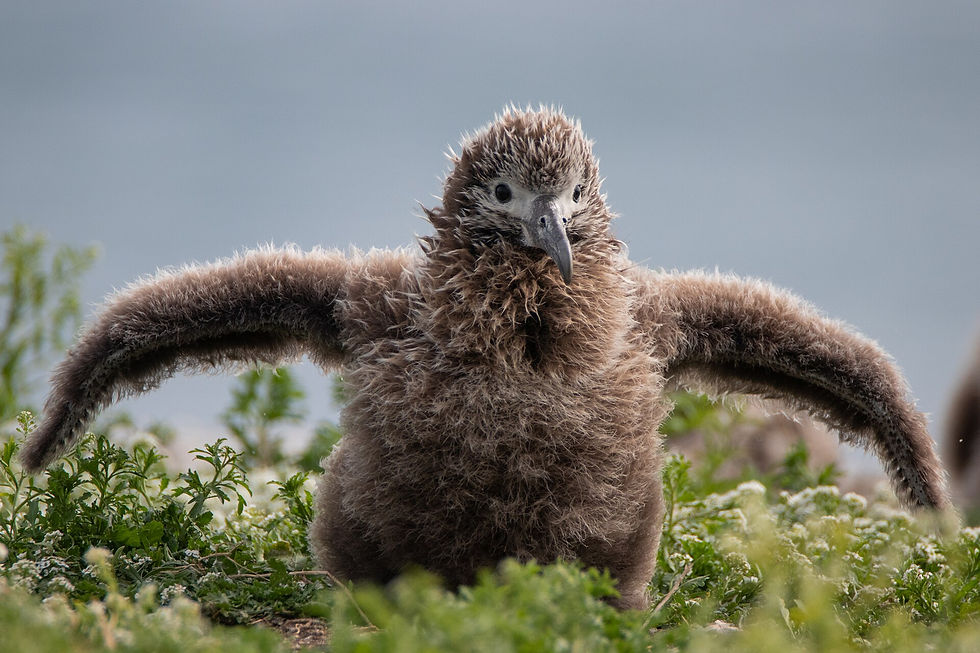
Foraging is extremely time-consuming in albatrosses. A single trip to sea often lasts 2 to 4 days, and sometimes even longer. During the brood-guarding period, this long-distance foraging strategy means that continued nest attendance limits food acquisition, affecting both chick growth and the parents' own body condition. Under these constraints, parents face a clear trade-off. If brood guarding ends too early, the chick may be more vulnerable to predation or die from exposure while left alone. If brood guarding continues for too long, parental body mass may continue to decline, potentially compromising future breeding performance. This is the essence of the parental dilemma.
To understand which factors affect the duration of brood guarding, researchers conducted an experiment on grey-headed albatrosses (Thalassarche chrysostoma) on South Georgia. They exchanged chicks between nests so that some parents were given chicks 6 days older than their own, whereas others received chicks 6 days younger. They then examined whether brood-guarding behaviour changed accordingly. The results showed only limited adjustment. Parents given larger chicks shortened brood guarding by only 1.2 days, whereas those given smaller chicks extended it by only 1.4 days. In other words, although the foster chicks differed in age by 6 days, the parents appeared to respond only weakly.
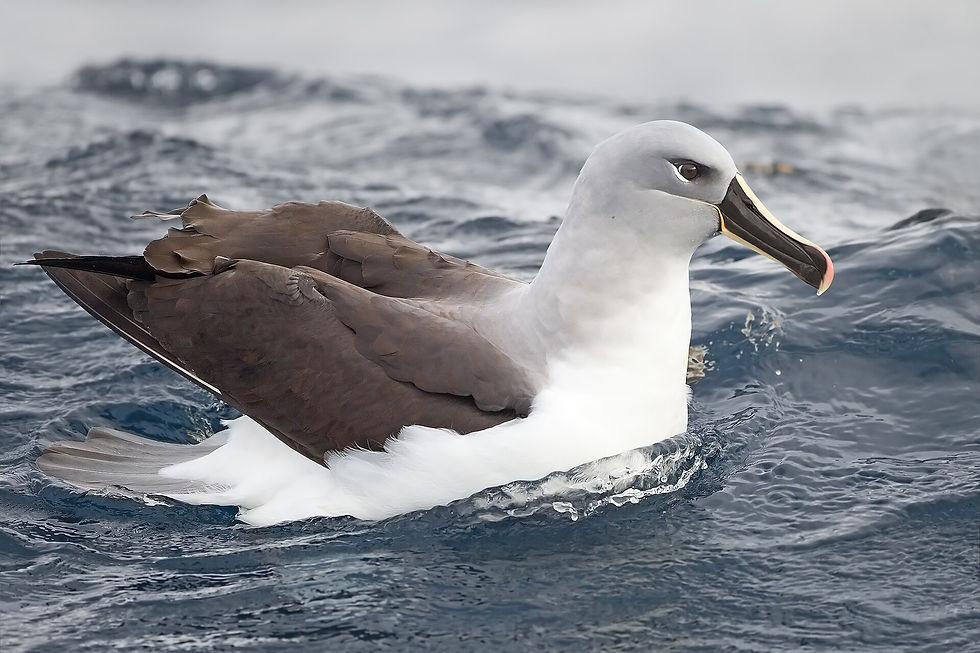
This suggests that albatross parents do not use chick age per se as the main cue in deciding when to terminate brood guarding. Instead, they probably rely on an internal timer and then fine-tune the timing of departure according to external conditions. This behaviour may be regulated mainly by prolactin, the level of which may decline naturally toward the end of the brood-guarding period, thereby promoting the decision to leave.
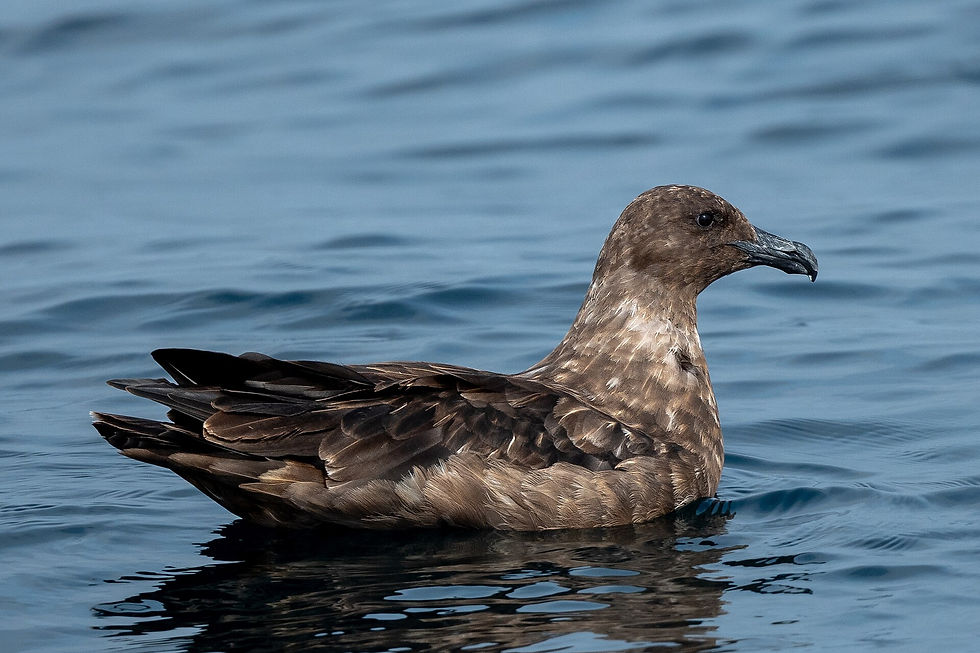
Because the timing of such internally regulated physiological rhythms is broadly fixed and linked to photoperiod, chicks that hatch later in the season may experience a shorter brood-guarding period if the date at which parents end guarding remains relatively constant. This pattern also fits seasonal variation in predation pressure. On South Georgia, one of the principal predators is the brown skua (Stercorarius antarcticus), which kills weaker or poorer-condition albatross chicks. During the peak of the albatross breeding season, however, the large number of chicks may dilute the risk faced by any one individual chick. Under these conditions, parents of later-hatched chicks may benefit from shortening the brood-guarding period, allowing their chick to begin spending time alone during the colony's peak breeding period. At the same time, both parents can begin foraging more intensively and bring back more food, improving chick growth. Even after the breeding peak has passed, a better-grown chick may then be in a stronger position to withstand predator pressure.
Once brood guarding ends, the chick's physiological stress-response system also becomes more active. The hypothalamic-pituitary-adrenal axis, or HPA axis, may elevate baseline corticosterone levels, helping the chick maintain a higher state of vigilance. This change may improve short-term survival prospects, but it also comes with metabolic costs, including reduced triglyceride levels.
The chick-swapping experiment also revealed a particularly striking feature of the relationship between albatross parents and their young: parents recognize the nest rather than the chick itself. When a foreign chick was placed in a nest, the attending adults immediately accepted it and cared for it without any sign of rejection. They neither abandoned the nest nor attempted to search for their original chick. Although this pattern is not especially unusual among birds in general, it is particularly thought-provoking in albatrosses, where each breeding attempt involves only a single egg and such high parental investment.
This is closely related to the brood-guarding mechanism described above. If brood guarding is driven mainly by internal timing and calendar date, rather than by active recognition and assessment of a particular chick, then there is little selective pressure for parents to evolve strong individual chick recognition. The nest site is fixed, and as long as the parent remains at that site and cares for the chick present there, it will, under natural conditions, almost always be caring for its own offspring. Once the chick leaves the nest, that bond effectively ends.
After fledging, young albatrosses spend 2 to 7 years roaming alone at sea before they return to the breeding colony. During this period, there is no interaction at all between parents and offspring. From an evolutionary perspective, a nest contains only one egg, so there is virtually no problem of confusing one chick with another. Because parents guard the nest for so long, it is also extremely unlikely that an outside chick could simply enter and replace their own. Recognizing the nest is therefore less costly than recognizing the chick itself. If the chick truly disappears, the parents simply terminate brood guarding and leave, returning only in a later season to breed again.
This may seem almost cold-hearted, but it is in fact the outcome of an evolutionary compromise. Under conditions of high reproductive cost, low breeding frequency, and a pelagic lifestyle, albatrosses have evolved a breeding strategy that is both restrained and highly efficient.
Author: Shui-Ye You
References:
Catry P et al. (2006). Factors affecting the solution of a parental dilemma in albatrosses: at what age should chicks be left unattended?. Animal Behaviour.
Cotton A et al. (2026). Physiological and behavioural responses of wandering albatross chicks (Diomedea exulans) to novel and non-novel predators. Journal of Comparative Physiology A.
Fay R et al. (2016). Paternal but not maternal age influences early-life performance of offspring in a long-lived seabird. Proc. R. Soc. B.


Comments