
Owls Use Blind Snakes as Nest Cleaners
- 演化之聲

- Apr 13
- 3 min read
Updated: Apr 28
In 1987, researchers in Texas, USA, observed something astonishing inside the nests of the Eastern Screech Owl (Megascops asio): live Texas blind snakes (Rena dulcis). These snakes had been brought directly into the nest by the adult owls, yet they were not eaten by the nestlings. Instead, they remained alive, moving and burrowing through the nest material and debris as if they were another resident of the nest. Decades later, in 2025, a similar phenomenon was documented again in Türkiye, this time involving the Eurasian Scops Owl (Otus scops) and the Eurasian blind snake (Xerotyphlops vermicularis). These observations raise a fascinating question: why would owls bring live blind snakes back to their nests?
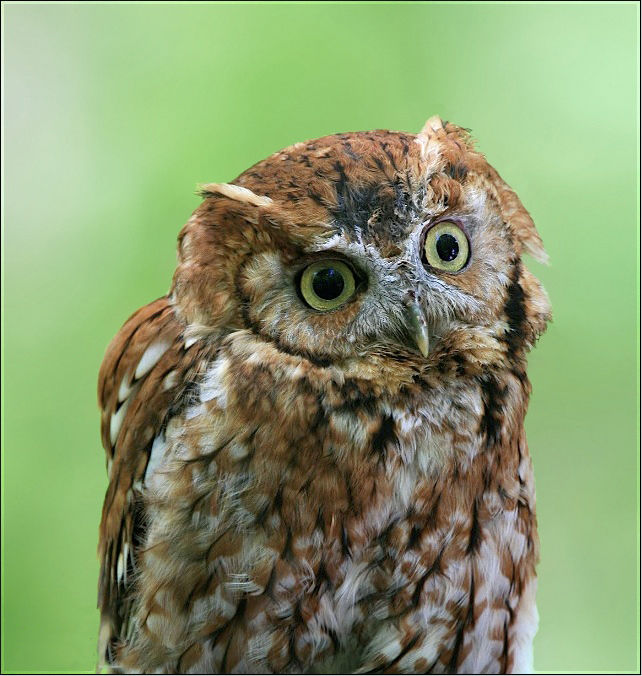


Neither the Eastern Screech Owl nor the Eurasian Scops Owl feeds exclusively on insects. Although large insects make up much of their diet, both species are also known to occasionally prey on small vertebrates, including reptiles. Yet these blind snakes, once delivered to the nest, can remain alive there for several days. The answer may be surprisingly simple: the owls may be using them to help remove insects from the nest.
An owl nest—especially one inside a nest box or tree cavity—is far from a clean nursery. Such nests often accumulate feces, pellets, uneaten prey remains, and damp, decaying organic matter. Together, these materials create a small nutrient-rich and humid microhabitat that readily attracts a wide range of arthropods and insect larvae, including fly larvae, ants, beetles, and mites. Some of these organisms may merely act as scavengers or commensals, but others can become a burden to the nestlings by interfering with growth, competing for cached food, or even biting the young birds and increasing the risk of mortality.
Blind snakes happen to be exceptionally well suited to dealing with exactly these kinds of nest inhabitants. They are typically fossorial, slender-bodied snakes with highly reduced vision, feeding mainly on ants, termites, insect larvae, and other small, soft-bodied invertebrates. The Texas study on Eastern Screech Owls showed that blind snakes inside the nest did indeed consume soft-bodied insect larvae, particularly fly larvae, while largely avoiding larvae with harder outer coverings. In this way, they appear to function, at least in part, as living nest cleaners.
But does this actually benefit the owls? The observations suggest that it does. In the Texas study, Eastern Screech Owl nestlings raised in nests containing blind snakes grew faster and suffered lower mortality. In the Turkish study, researchers monitored 109 Eurasian Scops Owl nests over six breeding seasons and found that 44% of them contained live blind snakes. Although there was no clear difference between nests with and without snakes in clutch size or brood size, nests with blind snakes had a much higher fledging success.
This phenomenon has been interpreted as a form of commensalism. Based on current evidence, the clearest beneficiary appears to be the owl. The blind snakes can certainly survive in the nest for some time, and in one case a gravid female was even found, suggesting that the nest can temporarily serve as a viable habitat. However, once the owl nestlings grow up and leave the nest, food resources decline sharply, and the snakes may eventually die from desiccation or starvation. For the snakes, then, the nest may function more as a temporary high-resource microhabitat than as a stable long-term refuge.
So do the owls actually know what they are doing? In most cases, raptorial birds kill prey before bringing it to the nest, and vertebrate prey is often decapitated to prevent escape or resistance. If owls are deliberately leaving blind snakes alive in the nest, then this behavior is unlikely to be accidental. Many seemingly complex animal behaviors do not require human-like conscious reasoning; they can also arise through natural selection as effective strategies. If owls that bring live blind snakes into their nests tend, on average, to raise more offspring successfully to fledging, then this behavior could gradually be reinforced over evolutionary time.
What makes this phenomenon especially compelling is that it is no longer known from just a single place or species. From the Eastern Screech Owl in North America to the Eurasian Scops Owl in Eurasia, two distantly separated members of the owl family Strigidae have now been found engaging in a similar association with small blind snakes. This strongly suggests that under certain ecological conditions, such a relationship may arise repeatedly and naturally as an adaptive behavioral pattern.
Author: Shui-Ye You
References:
Gehlbach FR and Baldridge RS. (1987). Live blind snakes (Leptotyphlops dulcis) in eastern screech owl (Otus asio) nests: a novel commensalism. Oecologia.
Göçer E et al. (2025). Association of nesting Otus scops (Eurasian Scops Owl) with Xerotyphlops vermicularis (worm snake) in Türkiye. Ornithology.



Comments